To the Point: Design Acoustic PS10A

•April 1, 2013 • Leave a Comment
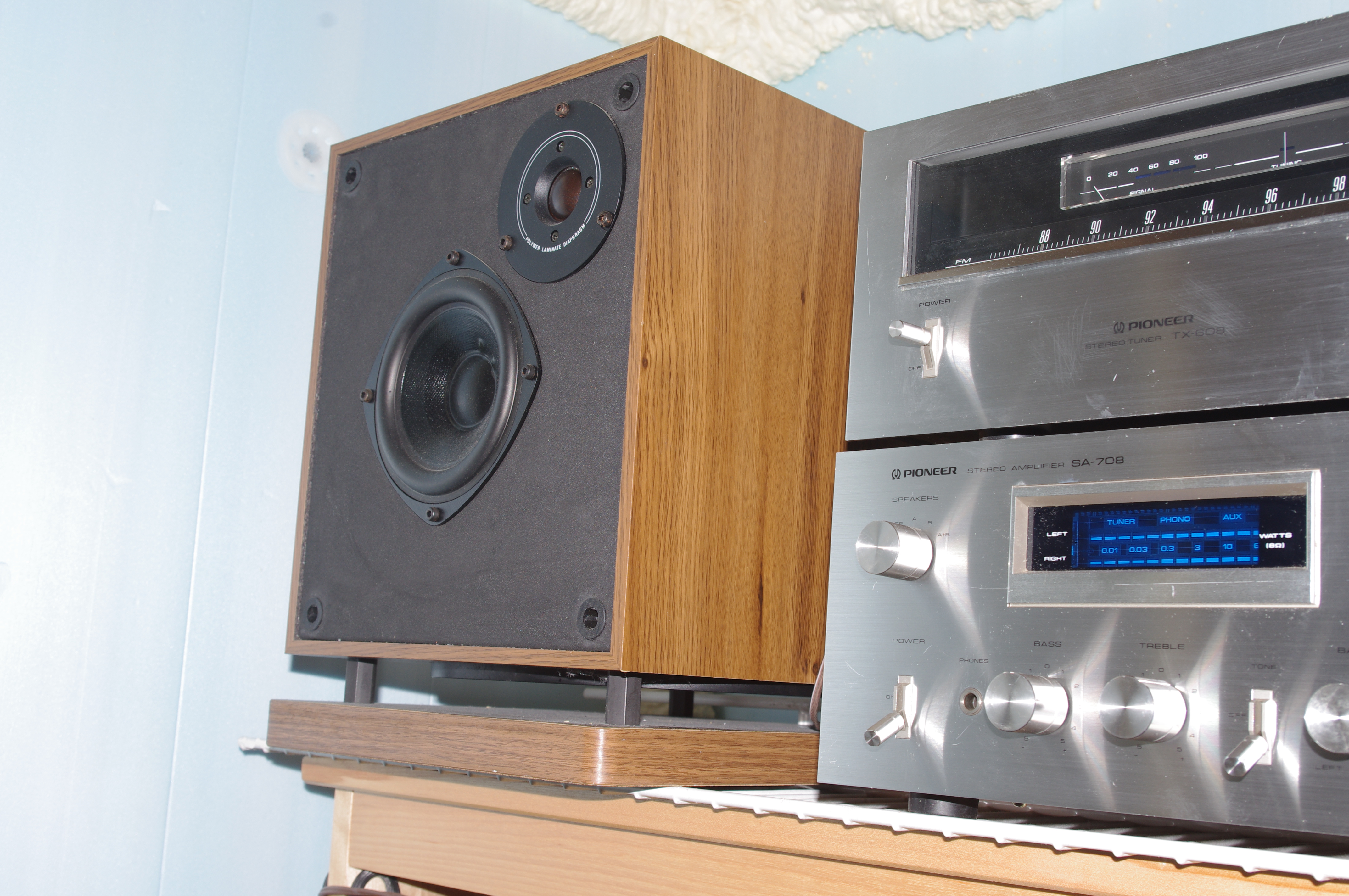
Design Source PS-10A speaker next to my Pioneer components

Design Source PS-10A speaker next to my Pioneer components

What a neat little speaker!

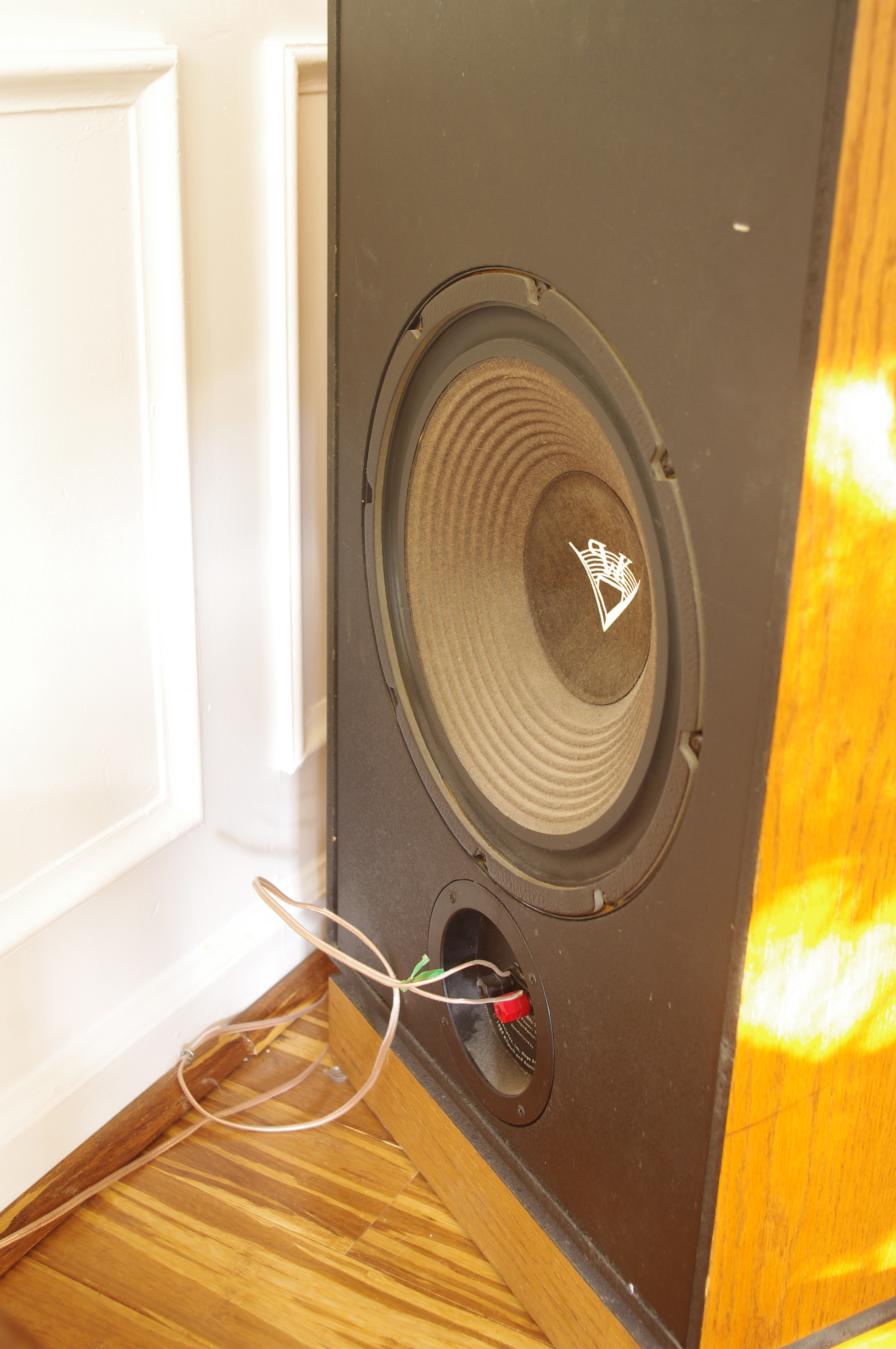
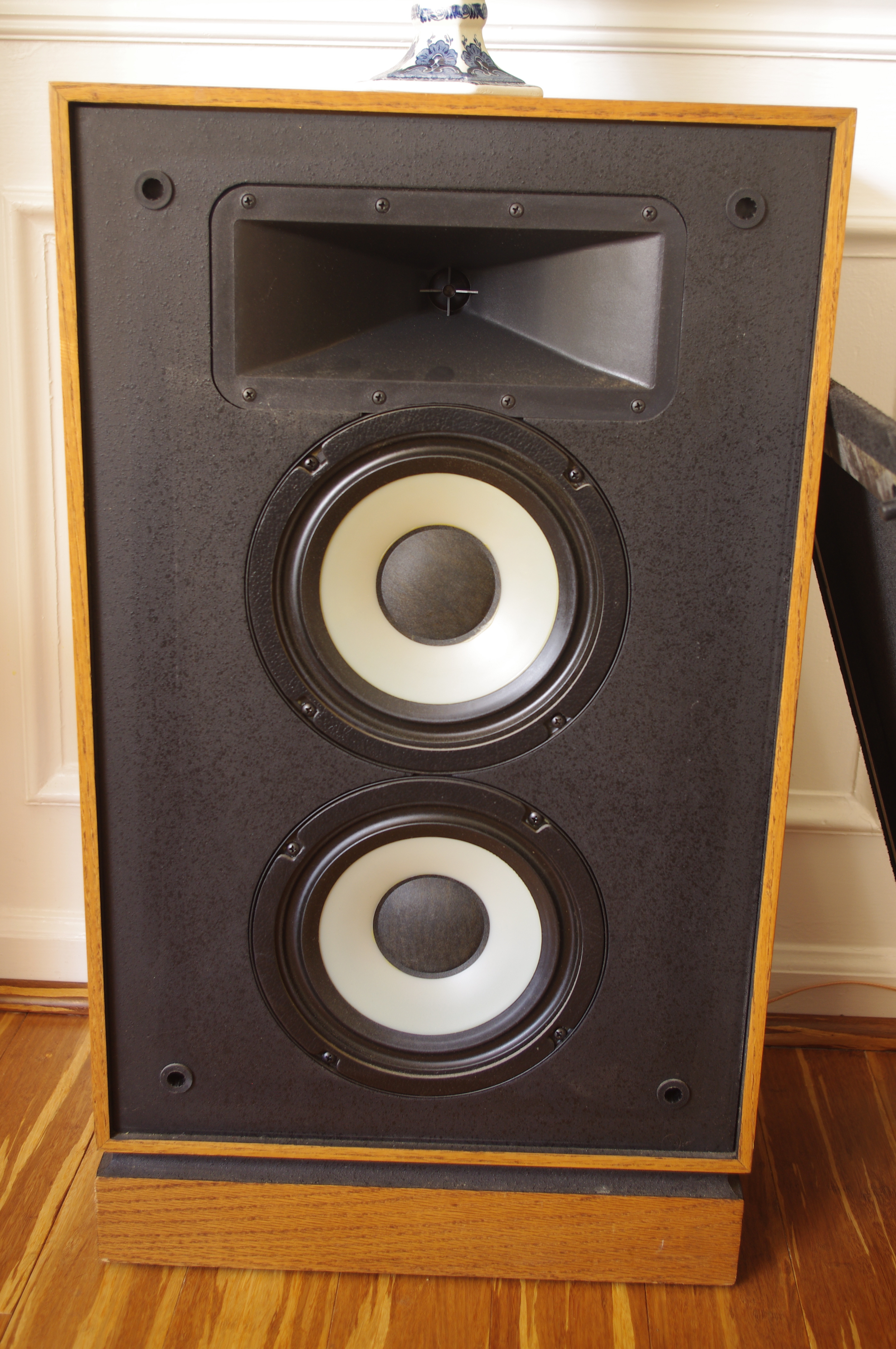
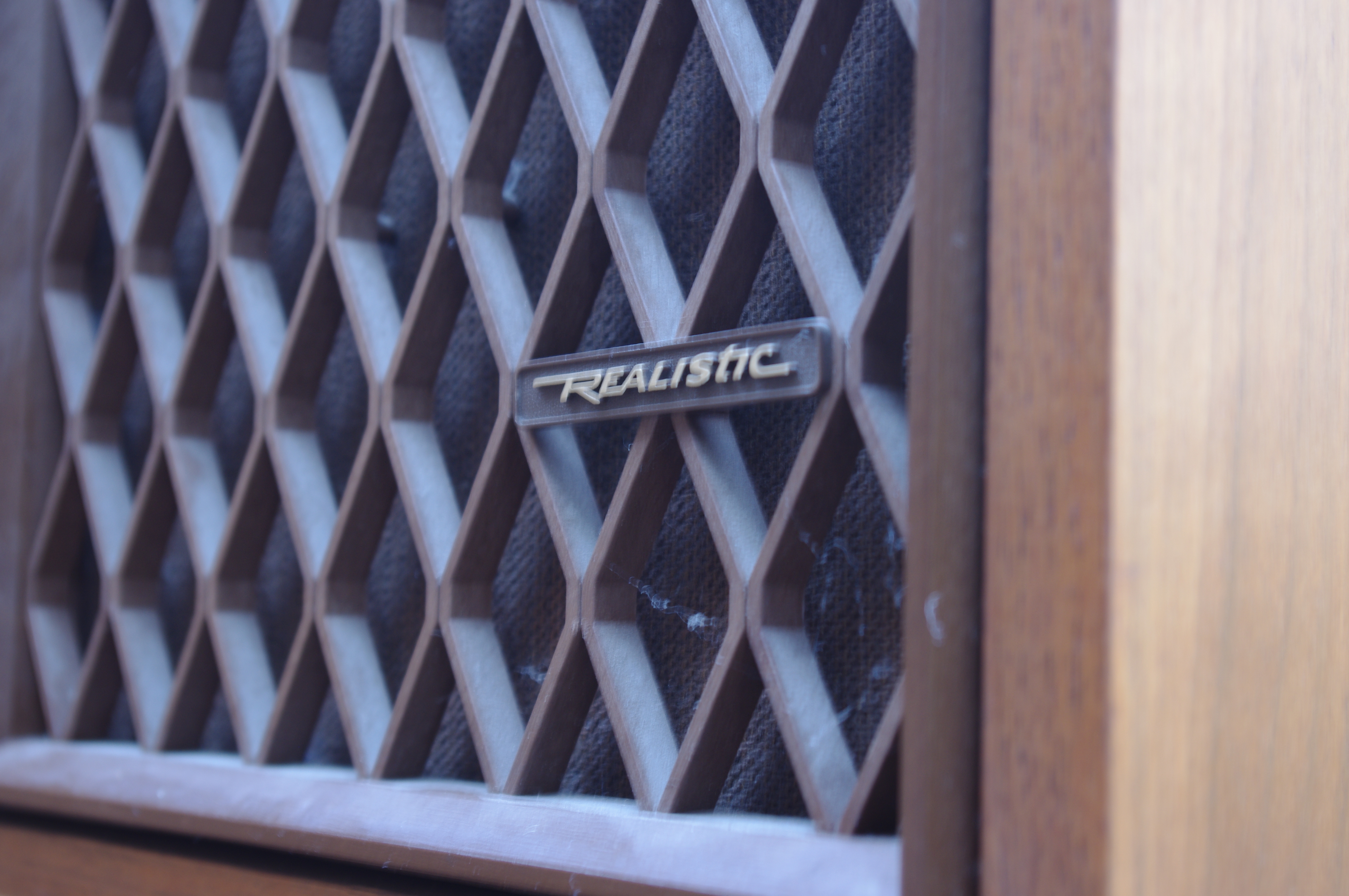
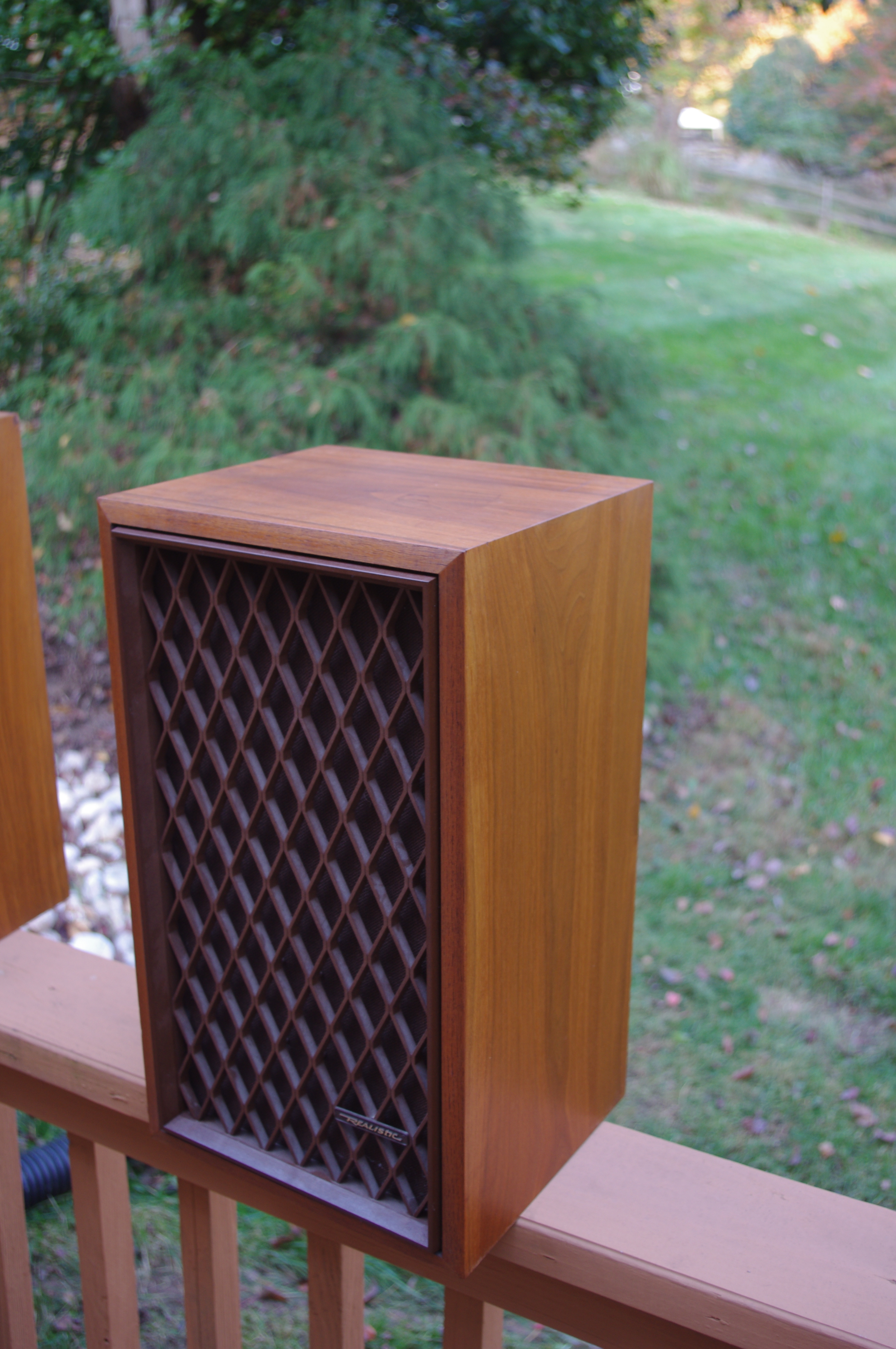
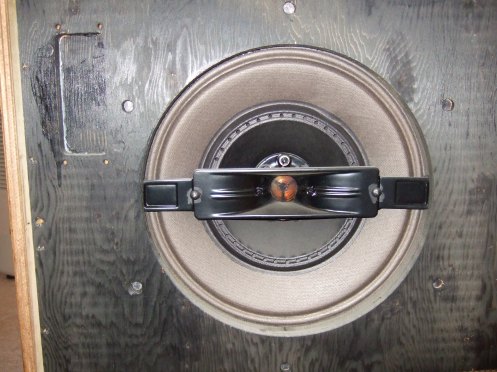
The Design Acoustic PS-10A is a compact 3-way speaker with an interesting twist – it’s almost a cube and from the front all you see are the 5″ midway and 1 1/8″ tweeter. The 10″ woofer fires down and is hidden above the raised base. Amazingly the cub dimensions give the speaker enough internal volume for it to reach down to a reported 48hz from a sealed enclosure.

There was no way of verifying that when I bought these – the woofers’ speaker surrounds had almost completely dry-rotted. The seller had not even known there were woofers on the bottom, or that they were inoperable!

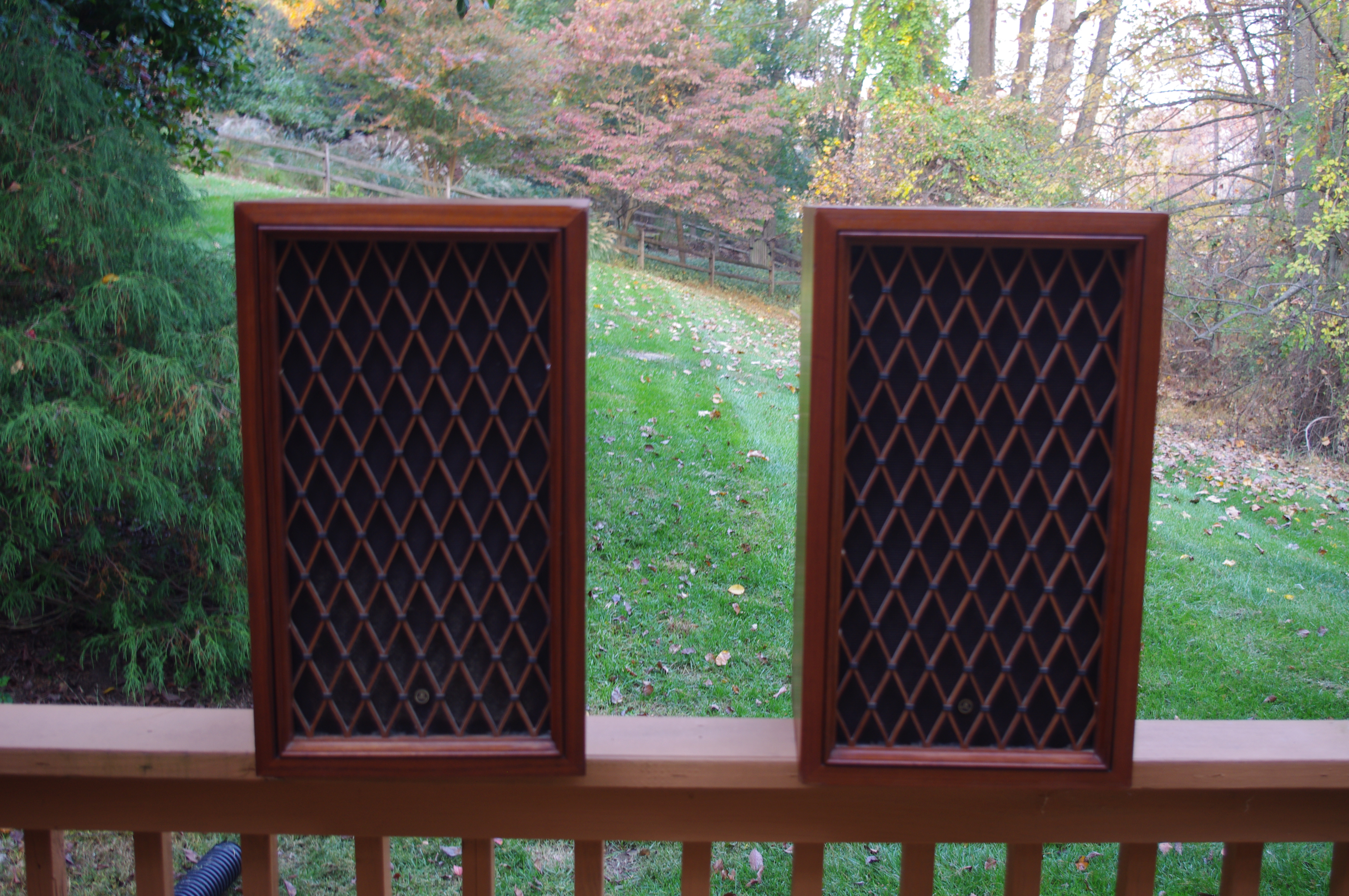
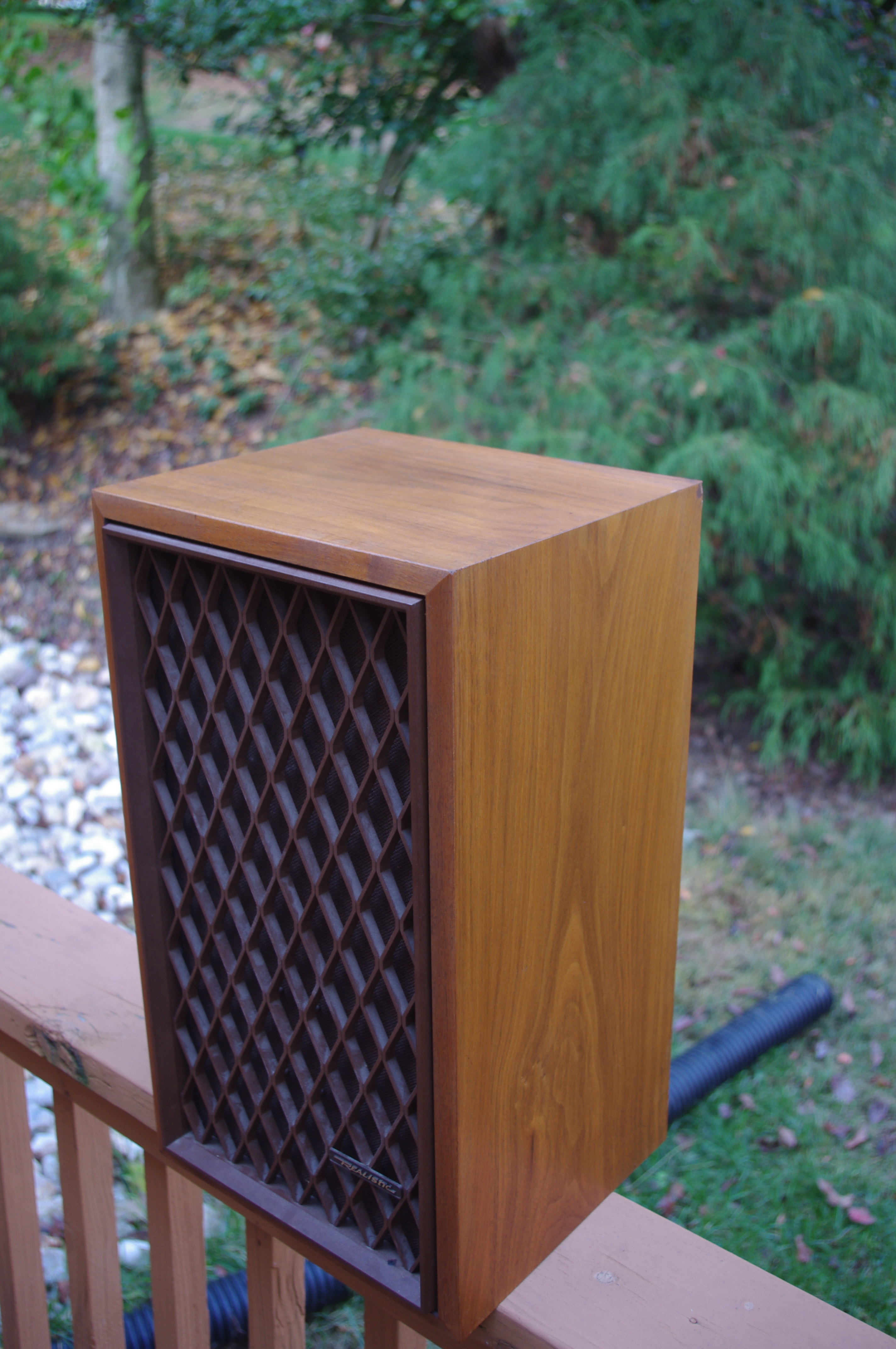
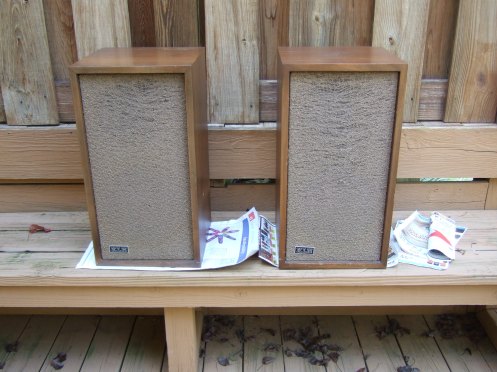
PS-10A with the grille on. Not much to see here.

PS-10A with the grille on. Not much to see here.

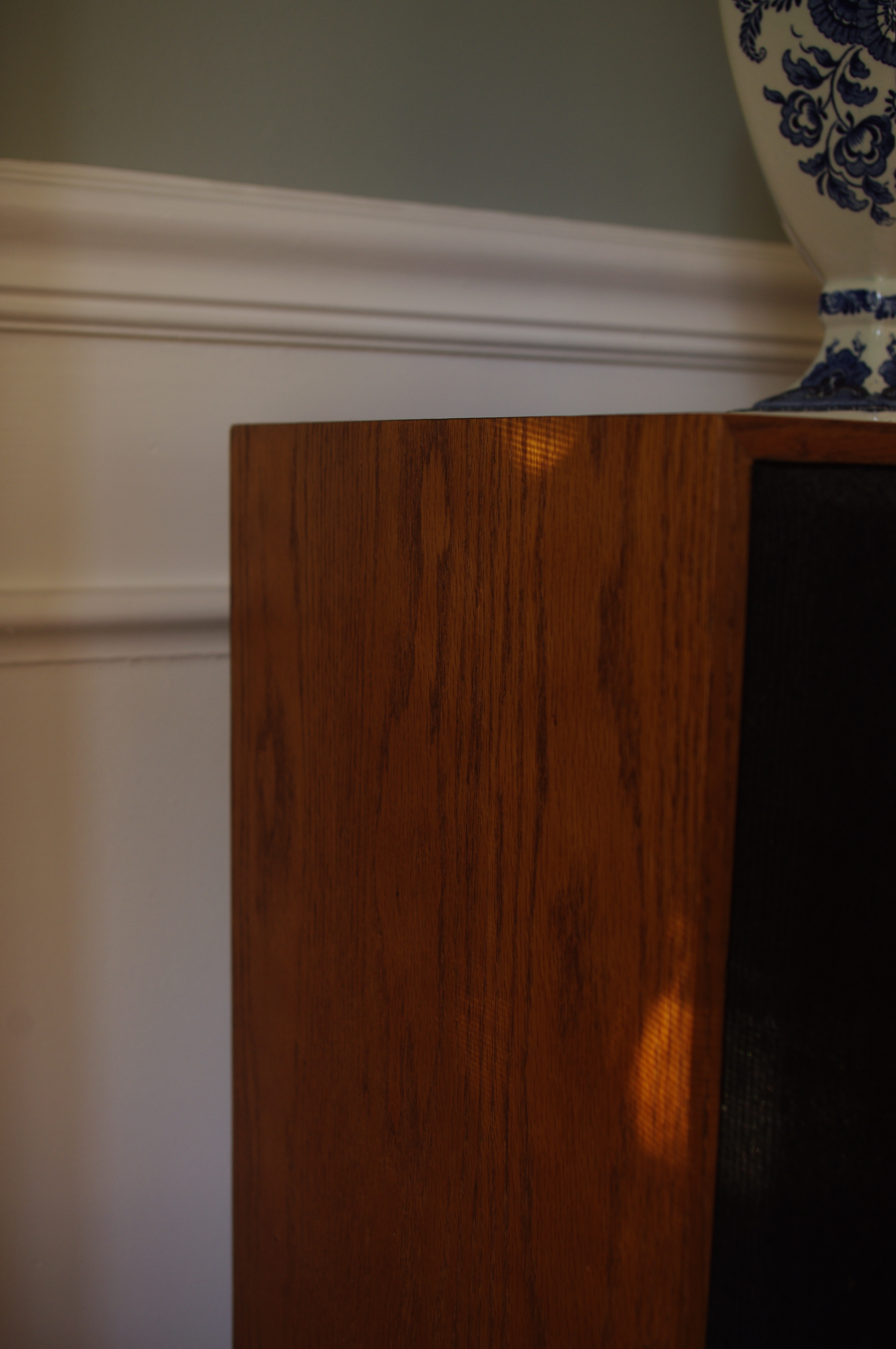
Otherwise these were in perfect condition – veneers (vinyl) and grilles were spotless, tweeters and mids in similarly good shape.

I bought a couple of replacement surrounds off the internet and got to work on the ratty woofers. The biggest part of the job was cleaning  the old dried foam off of the old woofer cone and basket – that took me about an hour total for both. Installing the new surrounds was simple – maybe took me 10 minutes per speaker. In an hour they were dry and ready to play. The woofers are an innovative shallow design, which allowed them to fit into the smaller enclosure. The tweeter was enclosed into its own isolation tube, which I noticed when I had everything apart.

After re-installation I fired them up. They loosened up in about one song and they things started to get fun.

The PS-10As are rated at 90db efficiency, and they don’t need big power to get loud. Surprisingly for a small speaker bass is present and accounted for – the down-firing woofer does its job. The larger enclosure over the earlier models helps as well.

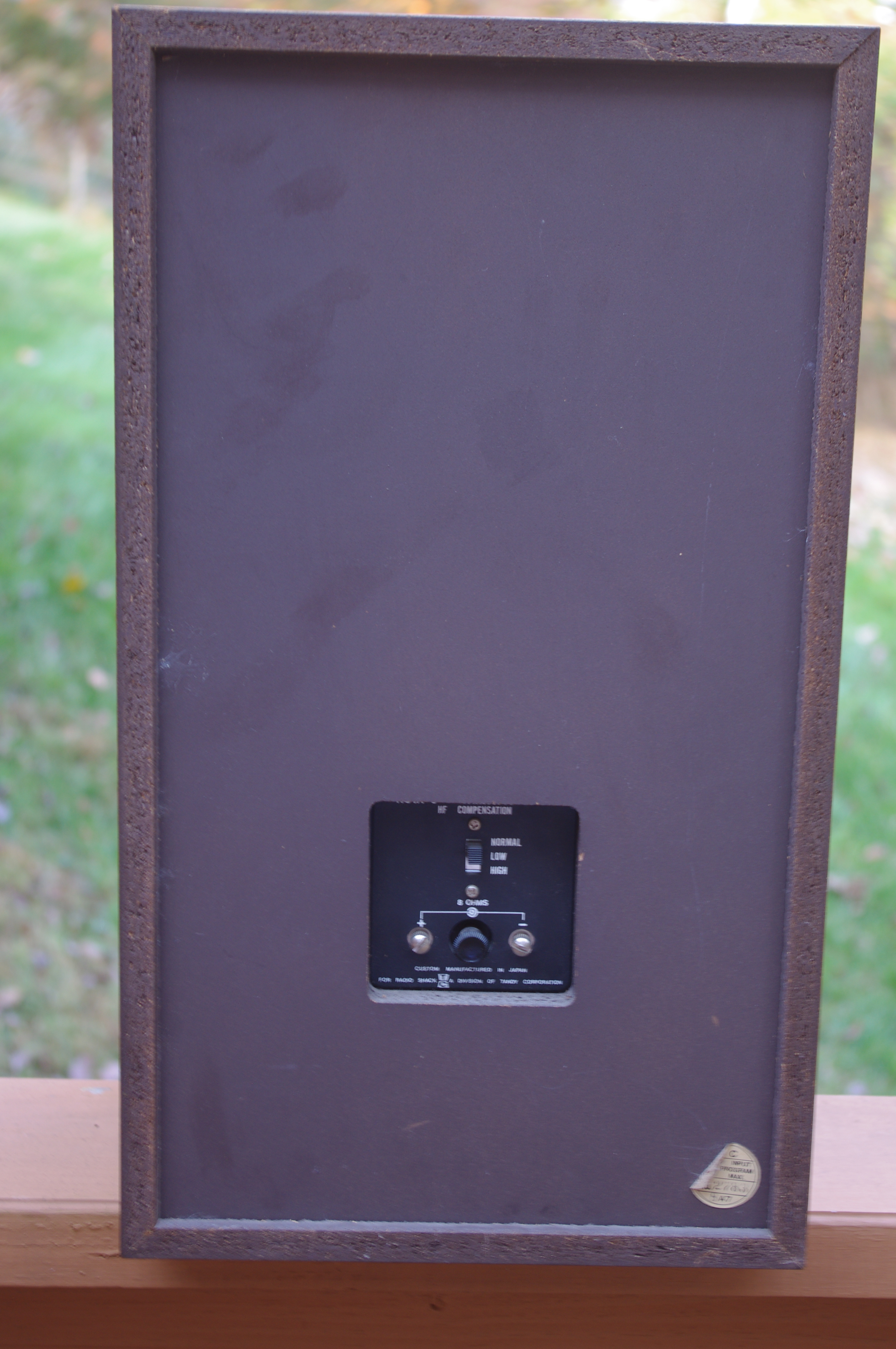
The ‘Point Source’ moniker was a nod to the speaker’s reported imaging capabilities, which are supposed to be impressive. I have to say that things sounded pretty good to me, but I didn’t ge the ideal placement in my short listening session to really prove the claim. I can say that these speakers can be a little heavy on the higher end of the spectrum – Design Acoustics planned for this, installing a +/- 3db tweeter switch on the back of each speaker to allow for placements bringing too much treble.

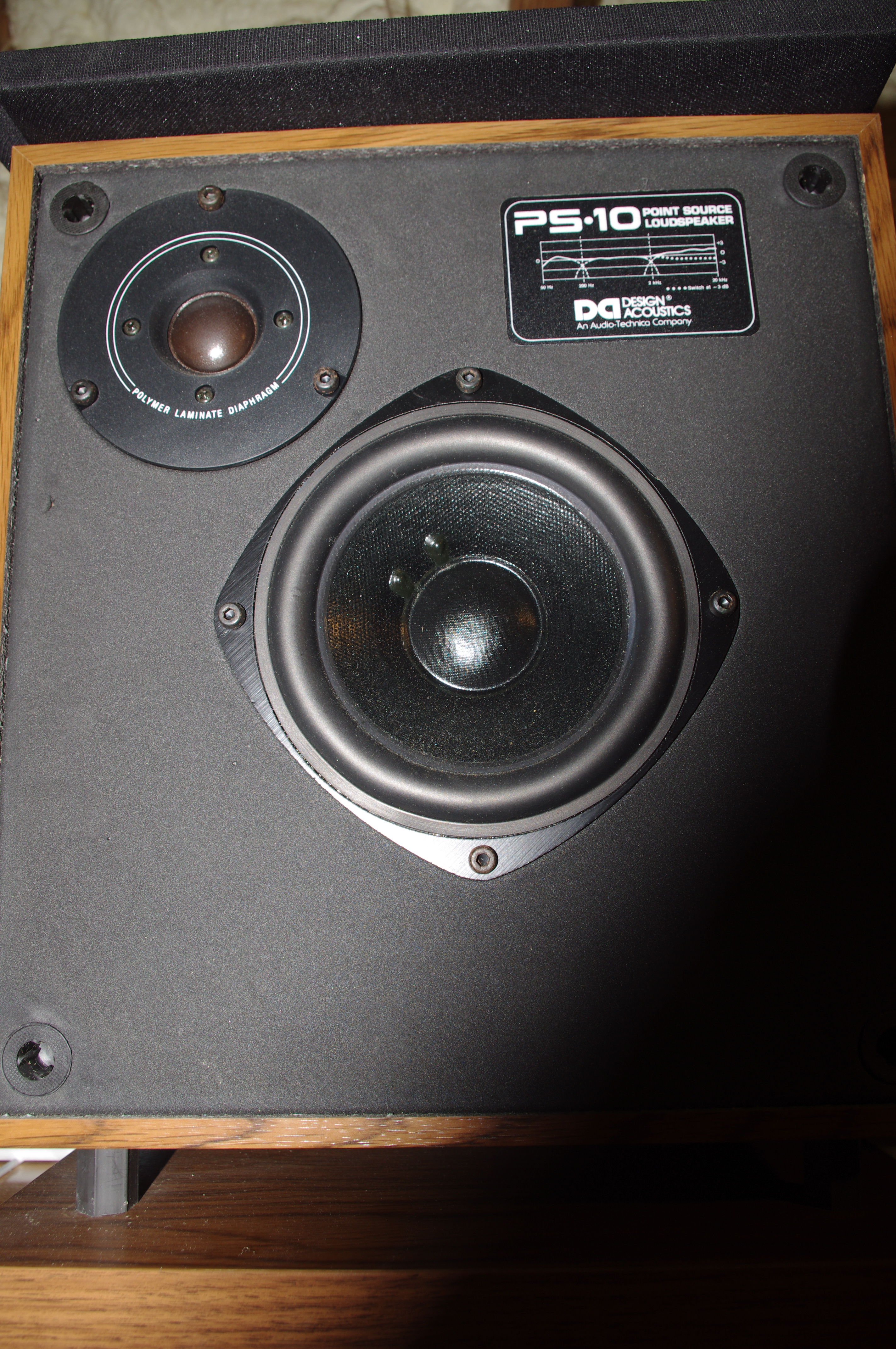
PS-10A front face. Little graph shows the frequency response.

PS-10A front face. Little graph shows the frequency response.

I have these currently hooked up to a Lepai 2020+ T-Amp on top of my workbench. This puts the woofers at about ear level while I am working. I do not sense any treble problems now.

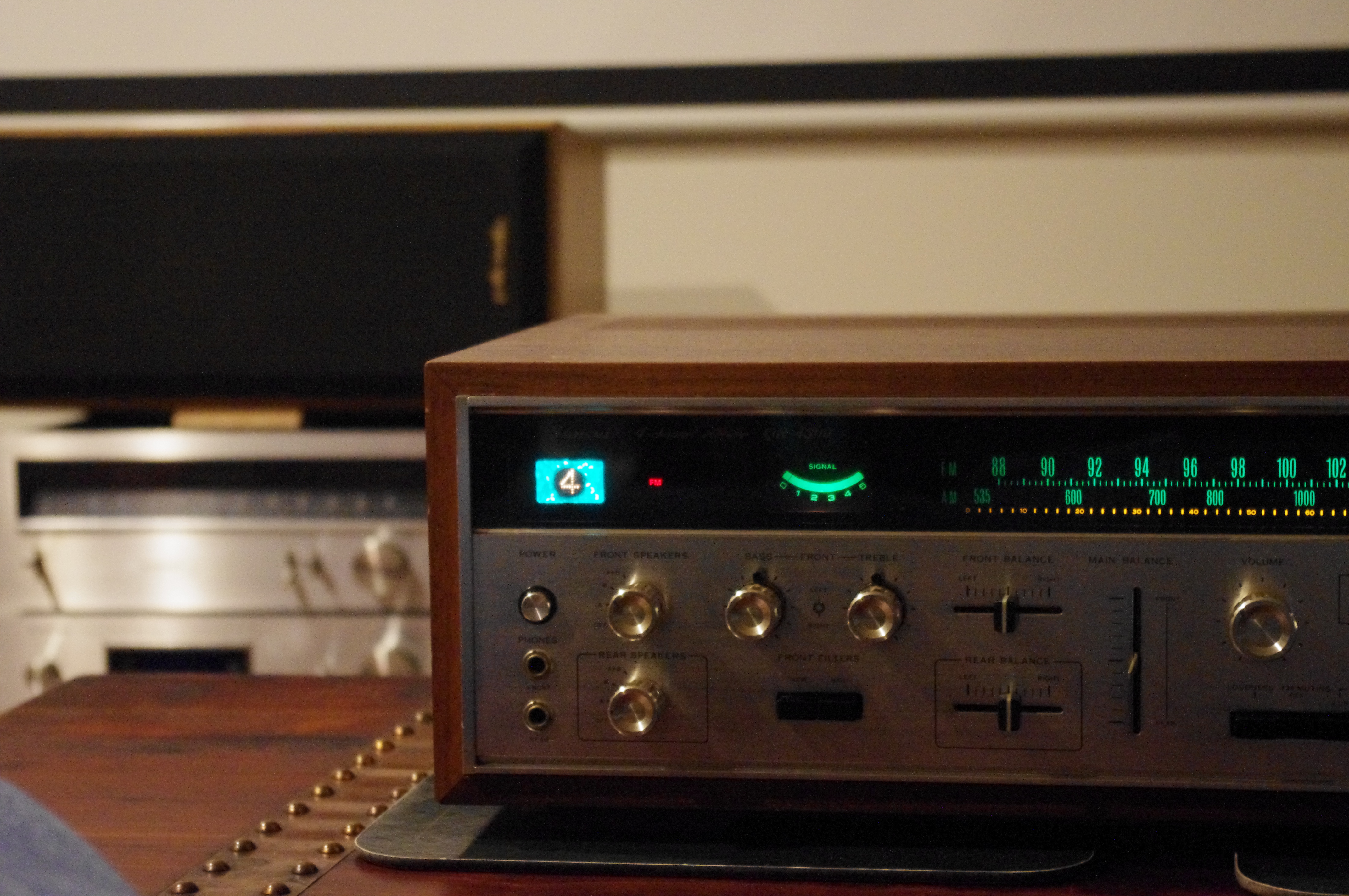
Four better than two? Sansui QR4500

•April 1, 2013 • 13 Comments
Sansui QR4500 all lit up

Sansui QR4500 all lit up

Another chance find at an estate sale. This Sansui peeked at me from behind a bunch of other stuff on a workshelf. It was dusty and stained and it had no power cord in the immediate vicinity. I soon located it, or its replacement – I guess Sansui power cords of this vintage are either easily lost or broken, and the previous owner had fashioned his own out of lamp cord and shrink plastic. It worked well enough. When I turned it on, it lit up but there was no sound. I took a chance and heaved the 50lb, 22″ wide beast back to my car. I got it home and opened it up. What a mess! Four channels evidently means 16 times more wire – there were circuit boards and capacitors and transitors and whatnot jammed in there in three dimensions. There was no way I was going to be able to repair this if there were issues beyond some dirty pots.

Thankfully there were not. I cleaned the six knob pots and the front-back and left-right sliders. Everything came back to life.

One thing that was more of a challenge was the tuner cord – for whatever reason the dial knob would slip on the cord and not rotate the tuner gang. Hence no radio tuning unless you were willing to pull off the solid-wood cover ,slide out the massive receiver ,and pull the cord between your fingers. I scanned the interwebs and on a hunch bought a chunk of 100% beeswax from Michaels (I needed about 10g, they only sell by the kilo). I rubbed the wax all along the length of the cord and it caught right away – tuner problem solved.

I pulled everything back together and switched back on. Bliss! I have to admit the coolest thing was turning this massive set on and watching the front dial light up – the tuner, radio dial, and channel indicator all glowed with a luxurious green and yellow vintage gleam. All the switchwork was weighted and full-metal, and the print etched onto the brushed-aluminum frame felt premium to the touch. In a nod to today’s receivers, it even had sound effect processing, allowing you to dial in concert hall sound settings along with your channel decoder.

QR4500 decoder and channel light

QR4500 decoder and channel light

After replacing all the fuses all channels worked as well. I plugged my iPod in and gave it a whirl.

The sound was very good for a 40 year-old 27 watt per channel receiver. These are good-sized vintage watts but I still was able to set the volume at 12 o’clock in my basement and jam out without my ears bleeding – similarly-spec’ed pioneer receivers never needed that much volume. Or they didn’t sound as good at that level – perhaps the Sansui was smoother at higher levels and had more realistic headroom.

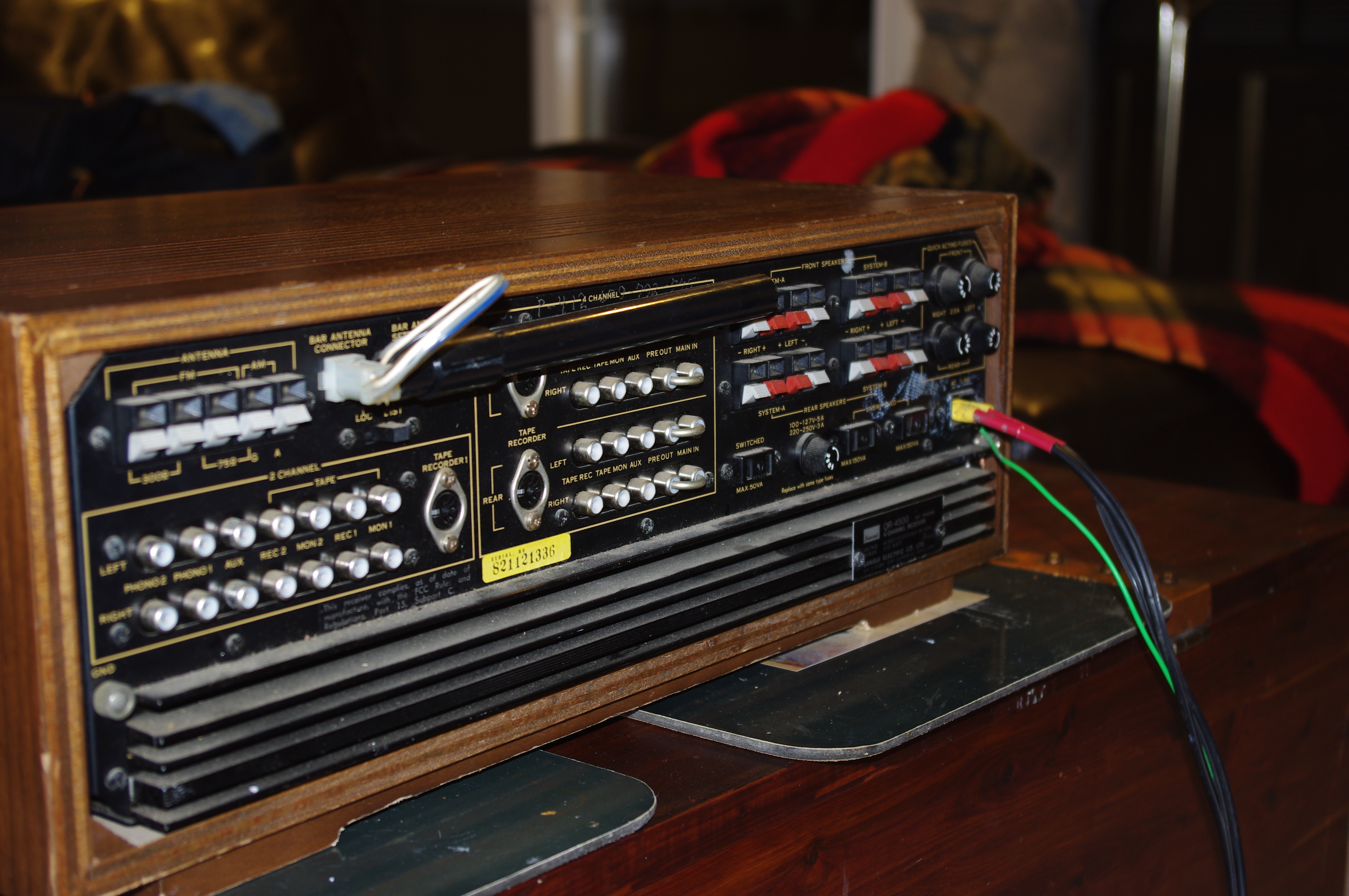
Good thing that you can hook up and play four sets of speakers total (2 quad setups!!!) The back panel of this thing looked like an old-time telephone exchange!

Sansui QR4500 rear panel. Note non-original power cord.

Sansui QR4500 rear panel. Note non-original power cord.

I really enjoyed listening to music on this setup. My favorite was Rusted Root – plenty of round full bass, happy and smooth top end. Like syrup pouring into my ears.

Eventually after being brought back to its previous beauty and performance this set found another home with a budding vinyl hobbyist. I’m just happy that I was able to help this set be enjoyed by someone else.

Channel indicator light aglow. Neat!!

Channel indicator light aglow. Neat!!

Chance Discovery: Denon, B&W

•March 25, 2013 • Leave a Comment

I just wanted to share while it was still fresh…

Yesterday I did a drive-by of a couple of Goodwill stores in our area (my wife likes looking for antique silver, I review the vintage stereo gear). By chance I looked over at some small black speakers, not expecting much. But they were more than I bargained for – B&W DM601s. A once-over revealed they were a little beat up – veneers scraped and one corner of the front face cracked from what looks like a drop on the floor. But all drivers work perfectly. $35!

I also found a Denon AVR-1907 in what looked to be perfect condition. I picked them both up and went home to test.

Wow!

Wow wow wow!!

I propped the B&Ws up on my KLH 6s and made some bi-wire jumpers from some old 14 gauge copper strand and plugged t hem in to the Denon, running from an iPod.

Amazing sound! They project a wide soundstage, very pleasant sound, maybe a tiny bit laid-back on top. But that keeps them from being harsh. It seems the Denon gathers steam slowly, but I really liked the sound. This was one of those demonstrations where you hear new details on the same old songs, and you like it.

Of course there’s not a ton of bass, but that’s to be expected.

Overall, I’m extremely impressed. Despite their size, I think these are my favorite speakers for the time being. I’m starting on the Polk 7B resto, and now I know what I’m aiming for in SQ.

Update – where have I been?

•March 25, 2013 • Leave a Comment

I haven’t written in a while, so here’s a quick update of what’s going on:

1. I’m in the process of a full restoration of the Polk 7Bs – I want to see how far I can take them. Right now everything is disassembled and I have pulled the vinyl wrap off of them. I have component and hardware lists, and have started to order parts. This should be fun.

2. I’m sending in my Pioneer SX-1250 for a full recap – it works and sounds find now (lots of power) but I’m very curious to hear what a full resto does to vintage gear. Stay tuned.

3. Circulating through my collection: Pioneer SX-727, SX-780, SX-750. All neat, all with different sounds. I’ll get to reviewing them eventually.

4. Speakers – I still have too many pairs to count that I haven’t reviewed here yet. A few notables who have passed through lately: Acoustic Research AR2AX, and a number of Realistic Nova 8s.

5. I just made a new discovery last night that I’ll write about in more detail in the next post – wow!!

New is not always better – Polk Monitor 7B and 5B

•January 31, 2013 • 11 Comments
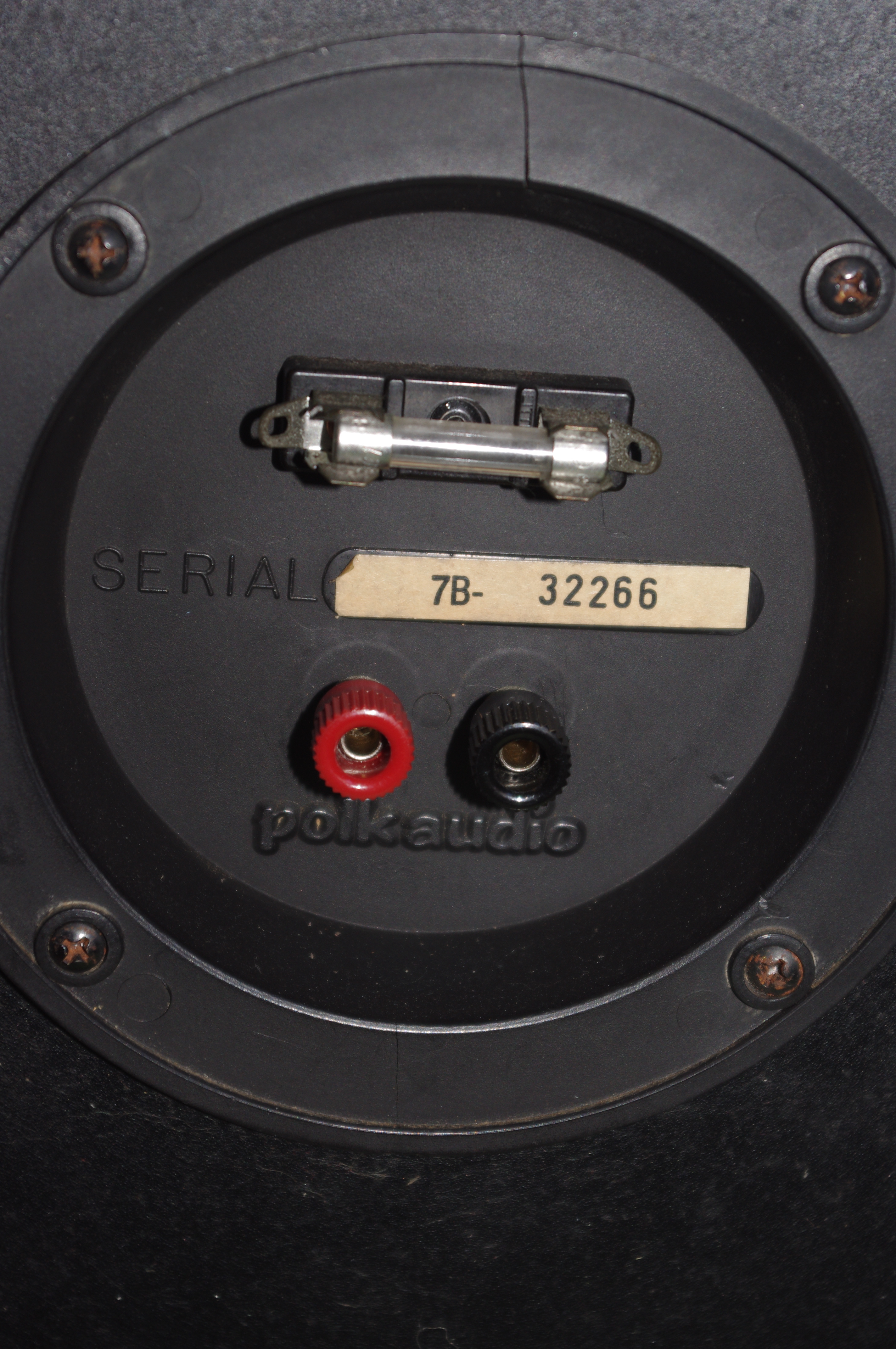
Polk Monitor 7B rear panel. Early Polks had fuses to the tweeters, replaced by polyswitches in later models.

Polk Monitor 7B rear panel. Early Polks had fuses to the tweeters, replaced by polyswitches in later models.

It was the Polk Monitor 7 speaker that really opened my eyes to what good sound was, or could be. And ever since that first beat-up pair I’d been a Polk convert, quickly finding a clean set of Monitor 7Cs, 4, then a modded set of 10s. The more I bought the more I liked them.

But every set had its idiosyncrasies. The 4s were little and sounded congested. The 7s were open and terrific with a wide soundstage, but the bass was punchy but not full in the lowest reaches, and the tweeter could be harsh and fatiguing. The 10s were softer but the imagine was blurrier, though the bass with much fuller.

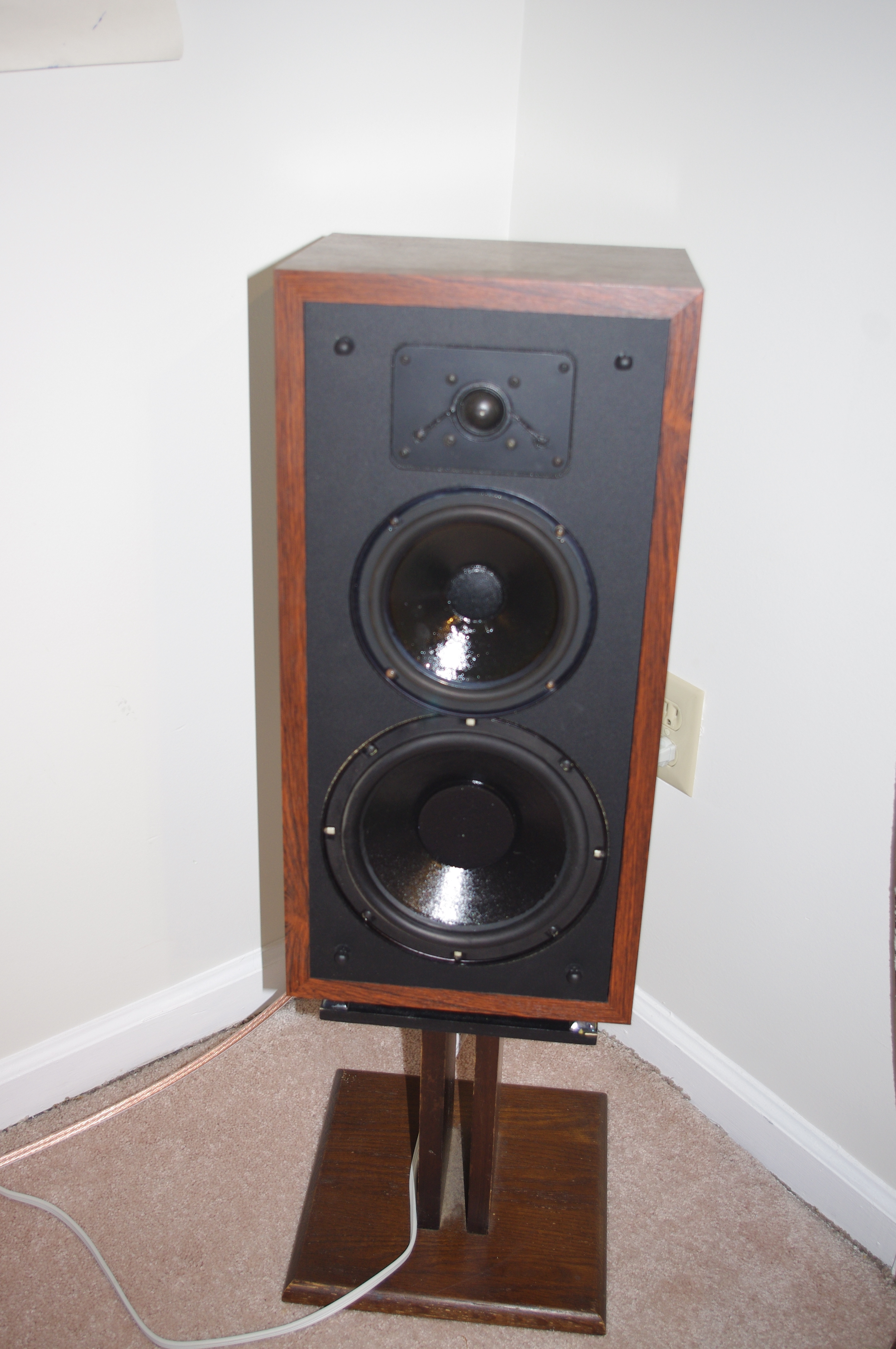
Polk Monitor 5B in rosewood veneer on original Polk stand

Polk Monitor 5B in rosewood veneer on original Polk stand

The 10s made me realize that the additional bass wasn’t worth trade-offs in accuracy or imaging. And in the end the 7s could deliver just fine in the bass department if you really cranked them. Or you could get a subwoofer.

What I really needed then was a 7 that was smoother on top with a subwoofer. Finding a subwoofer was easy. Where would I find a Polk Monitor 7 that was smoother and nicer on the top end?

Good thing Polk made one – the original Polk Monitor speaker with the Peerless tweeter.

Polk devotees know that the Monitor line came with a number of different tweeters over the years. First up were tweeters designed by the Swedish Peerless company and made by them or under license by Polk. They are a silk dome tweeter with a small hole in the middle of the dome and the wire contacts exiting on both sides at a downward angle. The entire construction was black. All models of the Polk line (5,7,10 and JR) in the early years got these Peerless tweeters. Their sound is described as clean but smoother, perhaps a bit rolled-back. Later on, Polk substituted these with its own tweeters, the SL1000, 1500, and 2000 tweeters, depending on application. In particular the SL1000 and SL2000 Silver Dome tweeters were known for harshness and fatigue in the upper registers due to a bump in output around 10-12khz. Later series II Monitors got the upgraded SL2500 tweeter, an improvement. You can substitute any tweeter in the line with replacements from Polk, the RDO-194, which are better than them all.

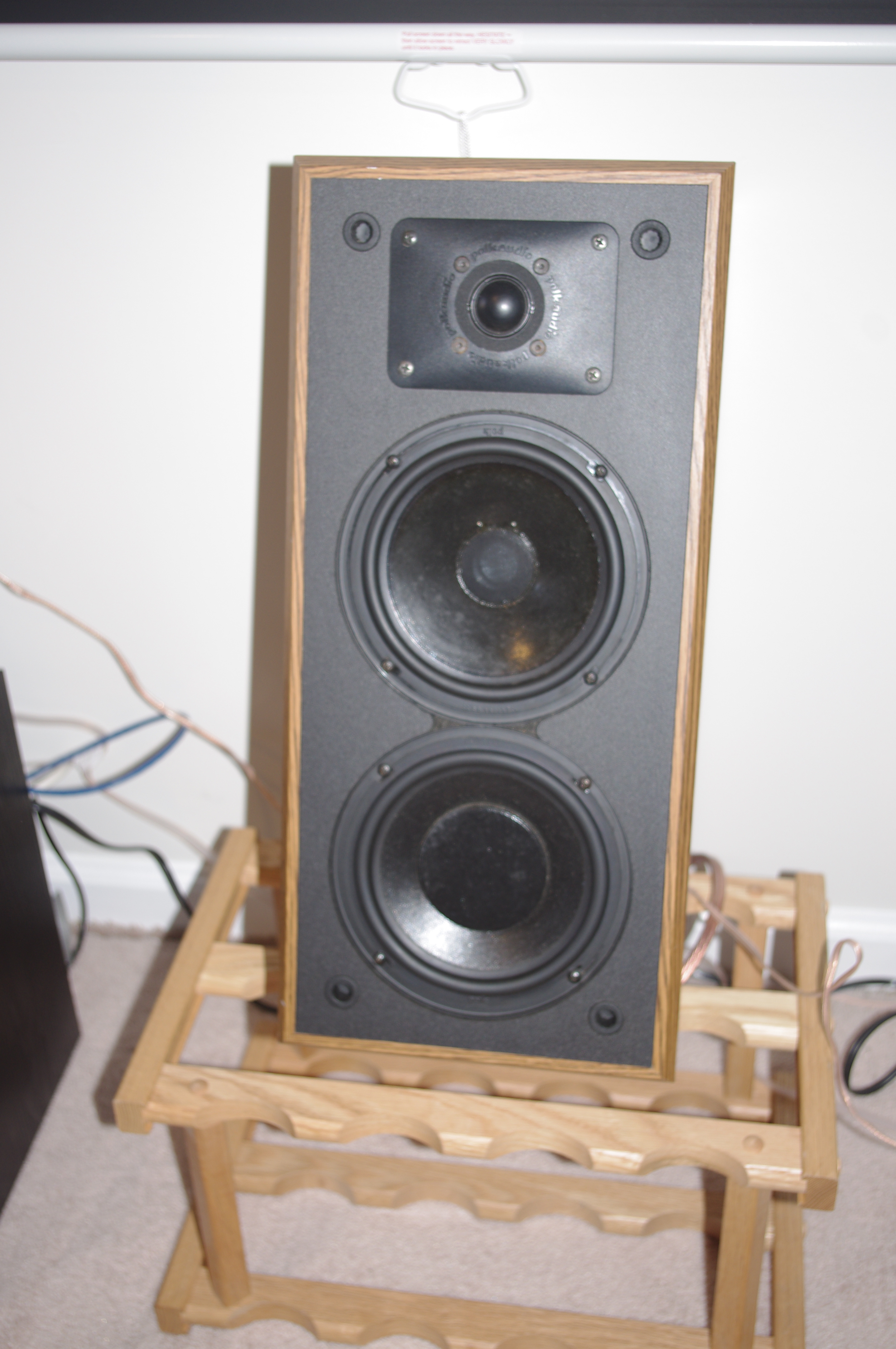
Polk Monitor 5B Peerless Tweeter

Polk Monitor 5B Peerless Tweeter

But barring a wholesale replacement, the general consensus is that the original Peerless tweeters are the ones to have. And Monitors with them command a price premium.

I was luck enough to meet another Polk aficionado in my neck of the woods with multiple pairs of early Monitor 7s and 5s, which he was nice enough to bring over to my house to demo on my system. What a treat! We listened to a very early pair of Monitor 7As, and a pair of 7Bs and 5Bs, all with the Peerless tweeters. The verdict? The famous Polk Monitor accuracy and full sound was there, as was the great imaging, true to form. The highs were just right in my mind – not laid back at all, but definitely not fatiguing or harsh like my 7Cs could be. Surprisingly, there wasn’t a huge difference between the sound of the 7s and 5s, at least in my mind – right through the mid-lower bass regions they sounded the same and just as pleasing.

My luck continued as I negotiated a deal for a pair of the 5s and 7s in trade for my modded Polk 10s and some cash. In one morning I had acquired an entire Peerless Polk Monitor home theater system! I paired it with a Polk subwoofer and a Polk Monitor 5JR Series II as a center channel. All 5 speakers were timbre-matched and sounded amazing. And with the subwoofer hooked in, the Monitors were not responsible for hitting the lowest notes, allowing them to do what they did best – everything else.

Polk Monitor 5JR Series II with SL2500 tweeter. ALso recapped - sounds great as my HT center channel

Polk Monitor 5JR Series II with SL2500 tweeter. Also recapped – sounds great as my HT center channel

I really really enjoy this setup. In fact I haven’t been able to best the sound it produces with any other speaker/amp combo I’ve set up in my theater area yet, bar one – the Boston A200s are in another league, and they took the front spots in my HT setup. Right now I have the 7Bs in storage as I enjoy the Bostons, and I may take the 5Bs out of my rear-surround setup and put a pair of Boston A200s in there for a while.

When I do that I won’t need to have both the 5Bs and the 7Bs around – I’m thinking of selling one pair and doing a full restoration on the other – nice recap, remove the vinyl veneer and put on real wood, re-cover the grilles, etc. I’m debating right now to keep the 7s or the 5s. Value-wise the 7s are nicer but the 5s give up almost nothing in sound quality and take up much less space. And with a subwoofer added, they are a wash.

Oh, the possibilities!

Raise the Roof: Klipsch KG4

•January 25, 2013 • 3 Comments
Klipsch KG4 in its natural environment

Klipsch KG4 in its natural environment

I only picked up these Klipsch KG4s as an afterthought while on a KLH binge – I’d found a pair of KLH 17s online and was dickering over them when  the seller mentioned these KG4s. I initially said no, laser-focused as I was on  the Model 17s. But after I read a few reviews online I was intrigued.

People absolutely raved about these speakers, saying they were the best they’d ever heard. Folks were fanatics.

And the price was right. I picked them up and took them home.

These are not small speakers (24.25″ x 15.75″ x 10.75″) and probably weigh 40lb apiece easily. And when you move them you have to be careful handling, as they have a huge 12″ passive radiator on the back.

Klipsch KG4 rear-mounted passive radiator. Dust cap is pushed in on this one. I said to be careful!

Klipsch KG4 rear-mounted passive radiator. Dust cap is pushed in on this one. I said to be careful!

The construction is top-rate – I have the oiled oak wood veneers and the look amazing. Like the Boston Acoustic A100s and A200s I have, this oak veneer is thick and textured, and not too glossy. Just right. It goes well with almost any decor, modern or vintage. It really fits in well in my living room. The front grilles are black and made up of a thicker more wooly-feeling stretch material than on other speakers. Taking the grilles and their neat metal Klipsch badges off affords you a view of the front half of this speaker system – two 8″ poly woofers and a 1″ K-74 horn tweeter. As I mentioned before, around back is a 12″ passive radiator which rounds out the system. So there’s a total of 4 moving sound surfaces in what is essentially a 2-way system. Compared to my Polk Monitor 7s (also 2-way with a passive radiator), this is a lot of firepower.

Klipsch KG4 without its grille. Note double 8" woofers and classic Klipsch horn.

Klipsch KG4 without its grille. Note double 8″ woofers and classic Klipsch horn.


The KG4 was the top dog in the new-for Klipsch KG line in the late 1980s and early 1990s – There was a KG1.5, 2, 3, the 4, and then from what I understand later 5 and up models. I’ve seen the KG2s around, which are basically one 8″ and a tweeter (not horn) in a not-much-smaller cabinet. The 3s and 5s came later and were in narrower and taller cabinets as audio design tastes moved away from big squat floorstanders to home theater-style towers.

So I got them home and hooked them up to my Pioneer SA-6500ii in the basement to give them a listen. They’re very sensitive (94db/w), so I wasn’t expecting to need a lot of juice to get them going.

And I was right. Wow! At ‘3’ on the dial, these KG4s were shaking the house! Bass was overwhelming – the ceiling in my basement was vibrating. Use these as home theater front speakers and you have no need for a subwoofer! And the mids and the highs were well rounded and pleasant. I really liked these speakers. Pushing them a few inches closer to the back wall cut some of the overwhelming bass from the mix by limiting the room the rear passive radiator had to do its work. That balanced things out well. Lesson: these speakers are very sensitive to placement, even more so than some of the others I’ve had.

In reviews people’s biggest complaint about these KG4s (and other Klipsch horn-loaded speakers for that matter) is that the highs can be shrill, overbearing, or harsh due to the horns. There is a small cottage industry of folks out there who modify Klipsch speakers to mitigate these symptoms. For whatever reason I’ve never had that problem with these KG4s. Perhaps the capacitors are worn out and are killing the shrillness or my ears aren’t that sensitive but I would say these are the opposite of shrill. Bob Crites sells crossover upgrade and horn tweeter diaphragm upgrades that I am intrigued to try. I think that my first stop will be new crossover components, then the tweeter upgrade.

Klipsch KG4. Nice cabinet veneers

Klipsch KG4. Nice cabinet veneers

Right now I have these in my living room hooked up to the Harman Kardon 3380 receiver. Neither the Klipsches nor the Harman are really shining here, but that is due to the terrible acoustics of the living room area – it seems to suck up extra volume from the Harman and it’s almost impossible to get a real clean and detailed reference-level sound directed to the seating areas at the other end of the room.

But I don’t use the living room for critical listening – we have guests in here and the volume is rarely at good listening levels. No one is ever sitting straight ahead trying to test the imaging capabilities of this or another speaker. Or we have the stereo set to classical music radio or jazz to reverberate through the house while we cook in the kitchen or eat in the dining room. For those applications the KGs are perfect – they have a surfeit of clean low-frequency sound which carries through the house and effortless mid and high ranges. It’s not every speaker that can overcome the decibel-suck of my living room to deliver pleasing frequencies throughout at reasonable levels. The KGs are like their own ‘loudness’ button.

Perhaps when I get around to a cap upgrade I’ll rotate them downstairs for a while for some critical listening duty. Right now I have the Boston A200s as the fronts in my HT and main listening setup. Since I hated the A200s upstairs and love them downstairs, I have high hopes for the KG4s, which I already like upstairs.


Getting Real: Realistic Nova 6B

•January 23, 2013 • Leave a Comment
Pair of Realistic Nova 6B

Pair of Realistic Nova 6B

These came in with the Pioneer SA-708/TX-608 integrated combo that I purchased last winter. I’ll talk about them another time.

These forlorn little Novas were an afterthought to the shiny Pioneer stereo, so lonely and ignored at the seller’s house that I overlooked them and would have happily left without them. But a twinge of pity and more than a pinch of curiosity made me fork over another $20 to put them in the car too.

They were water stained and scratched on the outside but not that beaten up. As with the Pioneer, they seemed to have lived a decent life, mostly ignored and dinged from multiple cross-country moves with different families.

Since they were the Radio Shack Realistic brand, I initially didn’t have high expectations, tainted as I was by the current state of Radio Shack’s chintziness. I should have given them more credit.

Radio Shack back in the day sold some good gear. They were the place the able hobbyist bought components and put together his own rigs – the thought being if you did it yourself, you could save on the assembly labor and pick nicer components. For their assembled speakers and stereos, Radio Shack advertised that its house brands maintained the same quality of the big names (KLH, Pioneer, etc) but at bargain prices. I had a Realistic receiver and liked it – looked great and hit all the right notes.

The Realistic speakers were definitely gunning for the big guys in the design department – the solid walnut-veneered cabinet and fluted front grille are note-by-note ripoffs of the Pioneer CS series of the same era, but here the grille is executed in plastic and not bent wood. For a smaller speaker (19 1/4″ x 9 /78″ x 11 1/2) they are quite heavy.

IMGP0546

So upon getting them back home I unscrewed the grilles and took a look inside. The speakers were immaculate – the faces and drivers untouched. These are 2-way systems with an 8″ woofer in a rubber inverted surround and with an full-range tweeter. Inside the cabinet I found a lot of fiberglass insulation and a simple crossover glued to the back of the plastic mounting plate – some resistors coming off of the 3-way tone switch, an inductor, and a capacitor.

IMGP0547

How did they sound? Not too bad. They played just fine through the entire range and I couldn’t find anything wrong with them. But they were blown away by my Polks and the KLH 6s edged them out easily  too. But after I gave them a cleaning and a run-over with some Howard’s finish restore and wax, they looked pretty good. And for some reason the solid construction and immaculate drivers stuck in my mind- wouldn’t it be fun to modify these speakers into something really special?

IMGP0543 IMGP0544

I eventually put new Dayton capacitors into the crossovers. This made an immediate difference, tightening the bass and waking up the higher ranges. They became much nicer speakers. But still with the very impressive stable I have going right now they don’t get much use. Maybe some day I’ll have more time to either enjoy them as-is or butcher them into something wild.

Pair of Realistic Nova 6B

Back from the dead: Pioneer SA-6500ii/TX-5500ii

•January 2, 2013 • 8 Comments
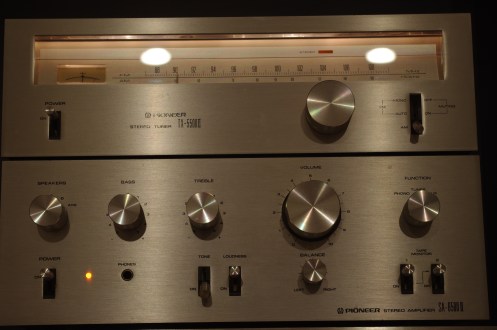
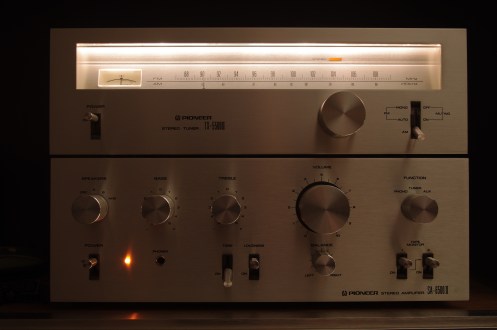
Pioneer SA-6500ii TX-5500ii combo

Pioneer SA-6500ii TX-5500ii combo

Back home one summer for 4th of July festivities, I spied this set in the rafters of my Dad’s garage. He had gotten them from an employee years ago and, with only one good channel, both the amp and the tuner went up into the rafters, never to return.

They looked so cool I fished them down and put them in the car for the drive home. When I tried them out I also lost a channel – it would crackle in and out. Otherwise the amplifier was in good shape – the knobs and faceplate were dirty but free of any damage. Dust and cobwebs came off easily. The single orange power lamp powered on and off. This was a candidate for some attention.

I pulled off the faceplate and the knobs. They slipped right off. After spraying contact cleaner through all the pots and switches, I used some degreaser on the faceplate and put everything back together.

I was a little worried that the degreaser would damage the nice brushed aluminum finish of the amp, but I should have been. Pioneer didn’t skimp when it came to construction of its components in the 1970s, even on the SA-6500, which was one of their lower-powered amplifiers. The degreaser cut through years of golden accumulated cigarette tar and restored the gleaming silver finish. Everything went back together and I pulled the amp downstairs for a listen.

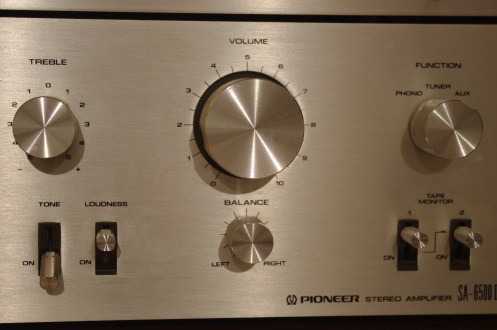
Pioneer SA-6500ii volume knob

Pioneer SA-6500ii volume knob

I wasn’t disappointed. The 6500ii had the typical fat and rich Pioneer sound, epitomizing ‘vintage’. For a modest 30 watts rated, this amp could really sing. It got my Polk Monitor 7s very loud at ‘4’ on the dial, and a later pair of Klipsh KG4s literally shook the house!

I learned that the ‘ii’ series were the continuation of the earlier 6500/5500 series, which had a little less wattage than their progeny. People seem to be ambivalent about any changes in sound quality or build strength between the first and ii series.

Pioneer SA-6500ii dial face. Simple and well designed.

Pioneer SA-6500ii dial face. Simple and well designed.

For the entry-level tuner in the integrated series, the TX-5500ii was also a surprise, pulling in stations from my basement with ease. The nice large yellow-lit dial was also a treat.

This combo was interesting to me – most separates are a bit smaller and narrower than their receiver counterparts and this set was no exception. But at about 18″ wide, these were considerably smaller than equivalent mid-1970s receivers, almost on the puny side. They really didn’t need any more room – inside the boxes there was amply space for working on components. But I could see how people who wanted to make these shiny components the centerpiece of their living room would look for bigger sets with more presence. And you have to admit that while they sound good, you don’t buy a shiny aircraft-grade aluminum-clad, knob-festooned mid-1970s Pioneer rig exclusively for the sound quality. You want to pretend you’re flying an airplane or operating a submarine while you’re rocking out.

IMGP0348

I really didn’t need another small component system, especially after I came across a later-model and more powerful Pioneer SA-708/TX-608 combo (more on that later). I also wasn’t warming 100% to the sound. Especially compared to some later model Pioneer amps, this one sounded too warm – too heavy in the bass and too rolled off in the upper ranges. It was losing some accuracy. Perhaps it would be a perfect pair for some mid-1970s Pioneer speakers, which some have called overbearing in the highs. In any case it found a happy home.

The Aristocrats: Coral Triaxial Driver/Electrovoice cabinet combo

•December 29, 2012 • Leave a Comment

DSCF9969

Here is another interesting estate sale find: these two large cabinets were hidden in the corners of a living room, covered in dust and assorted bric a brac. They looked as if they hadn’t moved in decades. When I pulled them away from the wall to take a look on the back I was greeted with a small brilliance dial and a small grey cord that snaked into the floorboards – these were wired into the house! I pulled up as much of the cord as I could and snipped it off. Both unwieldy cabinets were manhandled into my van and home I went.

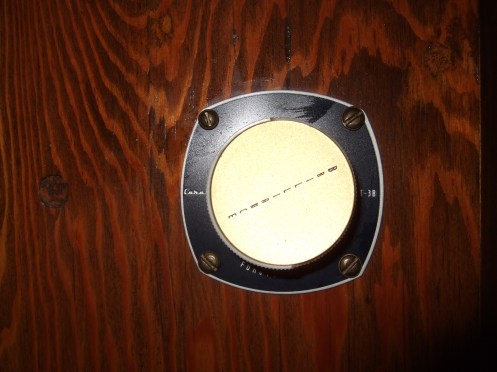
There were no outside indicators of the brand or specification of the speakers, or of the cabinet’s provenance. All I had to go by was the brilliance (tone) knob, which was labeled ‘Coral AT-4’. From that I was able to deduce that likely buried inside the cabinet was a Coral triaxial driver, likely made in the end of the 1950s. The cabinet was glued together and the front grilles were nailed in with approximately 20 nails apiece, so there was no quick and easy way in. So I plugged them in and tried them out.

Coral tone pot. My only clue.

Coral tone pot. My only clue.

With my newly-rehabilitated Pioneer SA-6500ii (more on that later), these speakers showed some character. I didn’t give them much volume- I was afraid to blow them, especially as some of the research I’d done online suggested that these speakers could be extremely sensitive 16 ohm models. In any case, they didn’t take more than a 1 or 2 on the Pioneer’s dial to wake up. Jazz sounded wonderful in a hazy retro way. Michael Jackson was less impressive. But they worked, they could take some watts, and had a pleasant if rounded-off sound.

DSCF9964

The cabinets and grilles were in perfect shape. The cabinets had a nice matched maple veneer on the front 2 sides and pine paneling on the back, all stained and covered in a spotless poly lacquer. Nothing was going to hurt these babies.

Electrovoice Aristocrats. This view shows off their 6 -sided corner design.

Electrovoice Aristocrats. This view shows off their 6 -sided corner design.

I really didn’t have anything for these guys to do other than hold up lamps in my basement so I put them on Craigslist. They didn’t sell but I did get some valuable information – these were the home-build version of the Electro-Voice Aristocrat series, built in the late 1950s and early 1960s. They would take a number of different drivers, including electro-voice, Altec, and Coral drivers. Mine were the Coral drivers, which I confirmed one day when I took the time to pull all those nails out of one of the grilles and look underneath. There the triaxial driver was, untouched and in pristine condition after all these years. Unfortunately it and the front panel were glued in too, meaning any attempt to re-wire or replace the crossover would require some major surgery. Content in the knowledge of what was inside, I buttoned the speaker back up and put it aside.

DSCF9962

Coral Triaxial Driver

Coral Triaxial Driver

Eventually this pair went home with a nice gentleman who planned to display the in his office – I imagine a sort of ‘Mad Men’ vibe.

KLH Model 6

•December 29, 2012 • 6 Comments

DSCF0262_2

Is vintage better than the newest gear? Can old be made better than new?

The KLH Model 6s I came across were definitely not better than new when I got them.

They looked OK from the outside – the cabinets and veneers were in decent shape with no gouges or chips, only some water damage. The grilles were complete but the weave was sagging. Inside drivers in both cabinets looked complete and untouched. I purchased the set from a nice older gentleman who had bought them new along with a wheezy Pioneer SX-727 receiver. He was moving into an assisted living facility now and didn’t need the big speakers. For some reason he held on to the receiver, however.
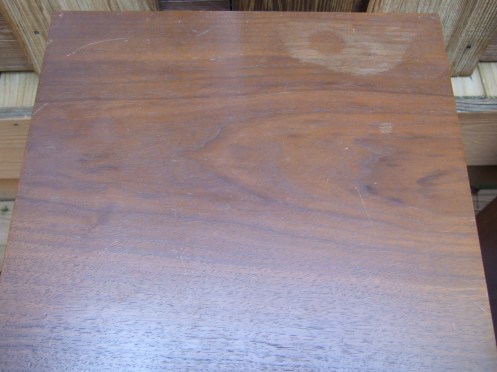
Water-damaged KLH veneer. Soon to get all better

Water-damaged KLH veneer. Soon to get all better

I got the speakers home and plugged them in – they were in the garage at the gentleman’s home and I didn’t have a chance to test before purchasing.

Unh. What a disappointment.

Muddy and veiled. Is this what people raved about?

I’d had my eye on a pair of vintage KLHs for a long time. The early KLH model series, including the 5,6,7,9,17,22/23 and many more, were designed by Henry Kloss, a legend in hi-fidelity design, who also led the design of some of the best-regarded stereo speakers in the 50s, 60s, and 70s at companies like Acoustic Research, Advent, and Cambridge Sound Works. I’d read that the Model 6 was what he considered the best two-way stereo speaker on the market at the time, and an amazing value.

I’d read descriptions of the sound that placed it as well-detailed, extremely pleasurable, and vintage. Folks raved about them, while noting that the tweeter, which reaches pretty low in the spectrum to pick up from the 12″ woofer (effective size is actually closer to 10″), does not go as high as modern tweeters.

Was this the sound everyone was raving about? If so then count me out.

The early models of the 6 had the woofer and the tweeter epoxied right to the cabinet and they cabinets were glued shut, making repairs all but impossible. My set, thankfully, were a later (1972 vintage) model with drivers screwed into the cabinets. I pulled them open to see what I could see.
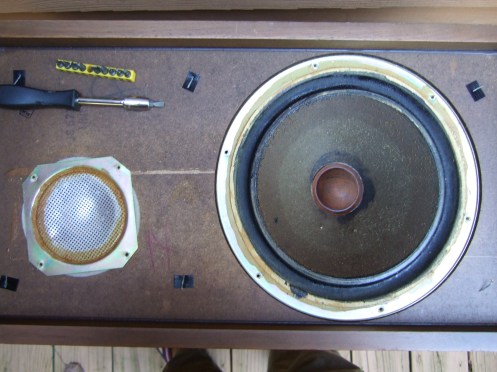
KLH 6 with removable drivers

KLH 6 with removable drivers

The crossover was pretty simple – a few resistors glued to the backing plate with three capacitors hanging in between the drivers, with a lot of nasty fiberglass insulation thrown in for good measure.

I read a lot more online and found out that these KLHs were notorious for having failing caps in the crossover system which could render the tweeter inoperable. Sometimes new caps were all that was needed to bring things back to life, other times the failed cap created an open circuit which blew the tweeter.
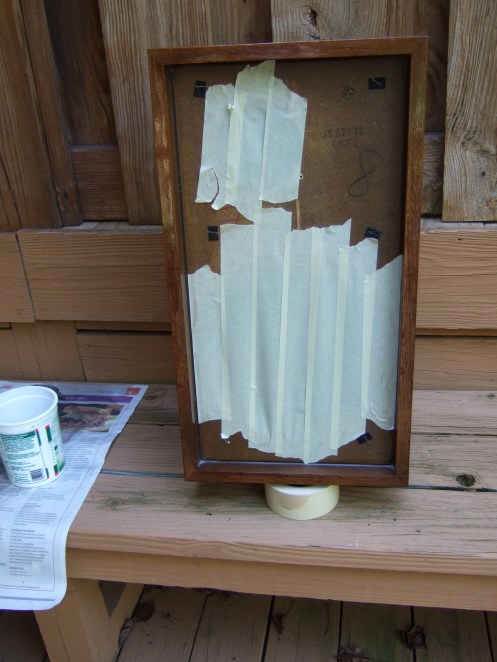
DSCF0286_2

I soldered in new capacitors in both speakers from Parts-Express (standard Daytons) and put everything back together. One speaker sounded amazing, the other not so. I had a dead tweeter on my hands.
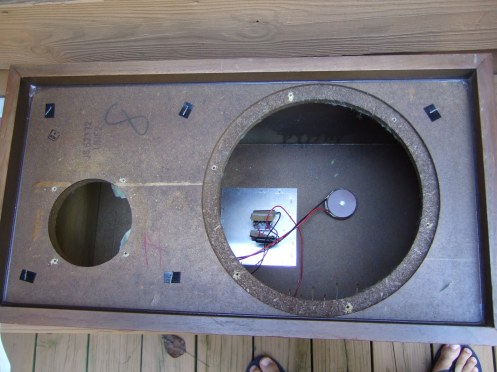
DSCF0270_2

6 with its innards out


Crossover. Couldn't be simpler.

Crossover. Couldn’t be simpler.


Nasty fiberglass batting. Use gloves to pull out.

Nasty fiberglass batting. Use gloves to pull out.

A nice gentleman on the Polk Forum sent me a replacement tweeter he had sitting around and I mounted it. In testing with the new caps in I finally understood what everyone was talking about. These sounded great! Vocals were clear,  airy and lifelike. Guitar notes shimmered and hung. Bass was big, real big. The only issue I could find is that sometimes the sound would get ‘boxy’ or constricted sounding in mid-heavy passages – the point where the band starts in ‘Wish You Were Here’ is an example. Perhaps this will go away when the caps burn in more. Otherwise I couldn’t have been more happy.

I was amazed at the size of the sound coming out of a two-way speaker of relatively modest size. These aren’t huge cabinets – 11″x23″x12 but they sure can put down the bass. I’ve read that more bass comes from properly sealing the cabinets and making sure that the cloth surrounds on the woofer are doped with a sealant. I put moretite on the drivers before replacing them, which I think will help. Since I’m happy with the bass response from the speakers I won’t attempt re-doping the woofer surrounds at this point. It seems that there is a risk of ruining the frequency response of the speaker if you don’t do this right so I’ll leave them be.

Not long after I screwed the speakers back together I noticed a buzzing sound from one. Using test tones I isolated the buzz to the lower registers of the tweeter, around approximately 1200 hz, with a return higher up the register. The buzz only came from the replacement tweeter. What a shame. The second tweeter to die. Judging from the amount of information online from folks with dead tweeters I began to wonder if these 40 year-old tweeters were a weakness and prone to failure. Looking on Ebay made me realize that they are pretty expensive ($30 per), and since I already had a lot sunk into these speakers, I didn’t want to take another risk. As an experiment, I ordered some phenolic ring tweeters from Parts Express which are billed as exact replacements for tweeters in classic 70’s 2-way speakers, including Realistic, Marantz, and Acoustic Research. They sure look identical to the KLH tweeters, once you have taken the metal grid off of them. Their outer flange is smaller so I had to fasion an adaptor out of wood so they will fit the larger opening of the KLH 6. I’m hoping having them another 1 cm forward of the original tweeter placement won’t introduce any phasing issues with the woofer. I don’t think it will since I’ve seen that over the years the tweeter placement depth on the 6s changed a little. If my experiment is successful I should have a restored KLH with perhaps improved high frequency properties. Of course purists will not be happy, but if the sound is right who cares? And if it doesn’t work my modifications are fully removable and I can spring for another original KLH tweeter on eBay.

Update – I just installed the tweeter. So far so good. Tone-wise I can discern no difference whatsover from the original functioning tweeter in the other speaker. Perhaps there is a little more presence or volume but the difference is so minute I can hardly tell. I ran test tones through both speakers and there was no buzzing or other bad behavior. I think I will do the other one with the new tweeter to have a matched set just to be safe.
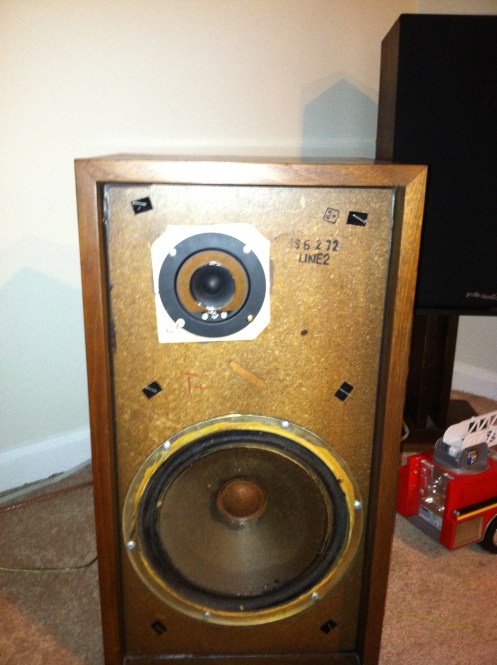
Modified KLH with replacement phenolic tweeter from Parts-Express. Everything works fine but the grille won't fit snugly over the adaptor the way I have it cut. Will have to work on that.

Modified KLH with replacement phenolic tweeter from Parts-Express. Everything works fine but the grille won’t fit snugly over the adaptor the way I have it cut. Will have to work on that.