A few months ago, I found these sad KLH 20 speakers in the corner of an almost cleaned-out estate sale. All of someone’s worldly possessions were being distributed to the neighborhood curious, one by one.
As I walked in, someone was already walking out with a very nice-looking Dual model turntable and I heard from the guy running the sale that a pair of KLH Model 12s and a KLH Model 20 stereo amplifier and turntable had also already walked out the door.
I took one last look around and spotted these in an upstairs corner.
KLH Model 20 speakers. A two-way acoustic suspension design with a 10″ woofer and a phenolic ring tweeter. Standard going for the KLH series in the 1960s and 1970s, and very similar to the KLH models 6, 17, 23, and others.
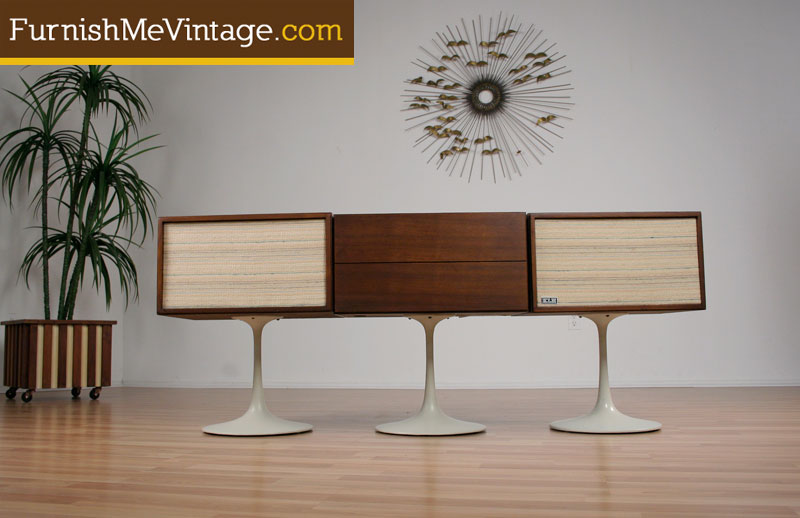
The 20s were only sold as part of a proprietary system along with a turntable and amplifier. Period advertisements show them on matching space-age stands, which could be configured to stand together in a floating console-look system or arrayed around a room for better stereo dispersion.
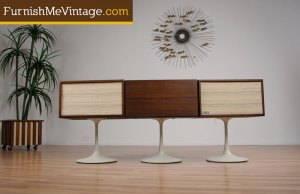
KLH Model 20 set. Not mine
The 20s are still collectible, especially as a system. I wondered why someone would walk out with the amplifier and turntable, but without the speakers. Their loss, I guess.
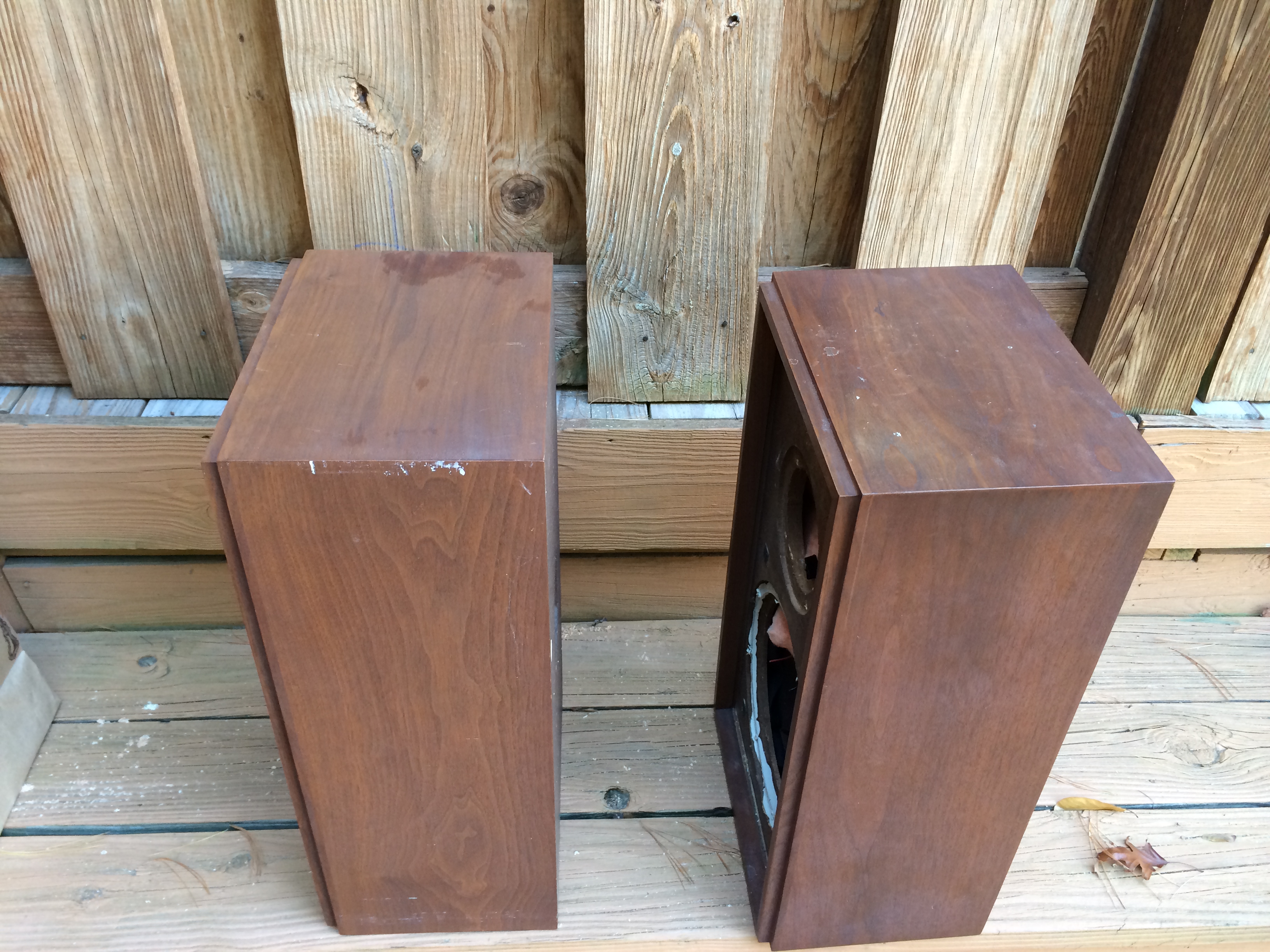
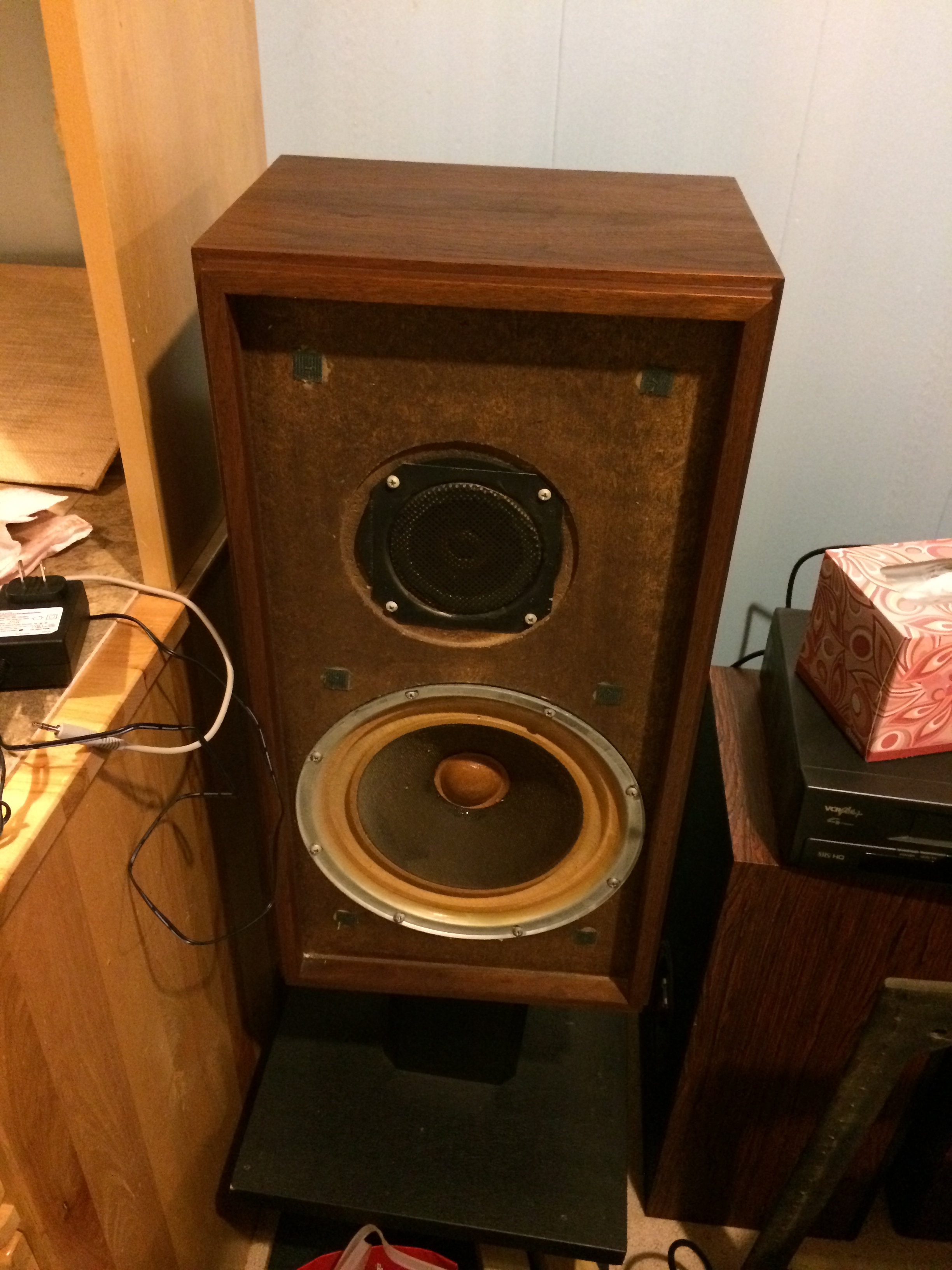
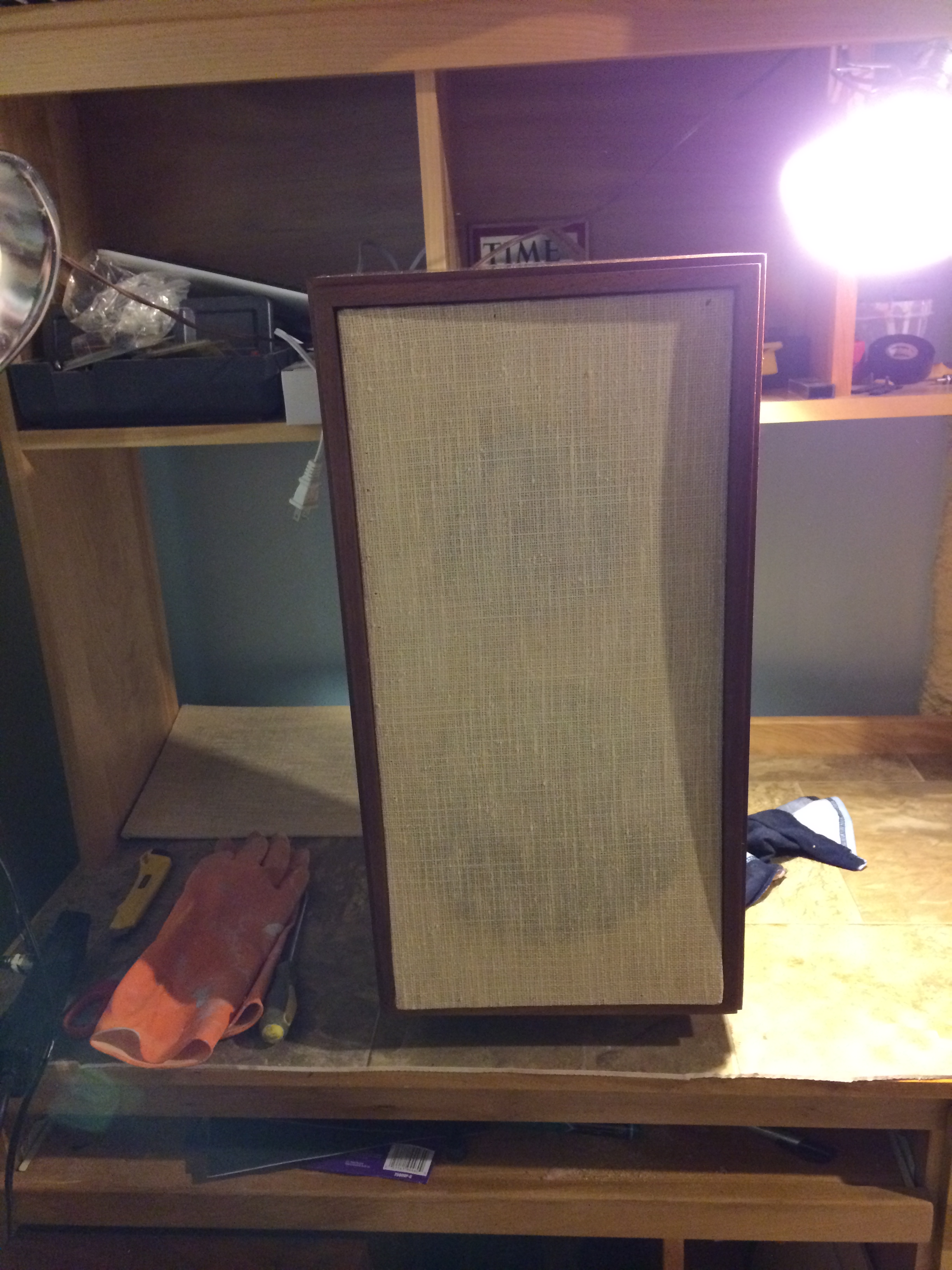
So I took them home. Upon first inspection, they were dusty and the cabinets had a few paint speckles on them, but no scratches. Just years of dust. Grilles were dirty but intact as well.
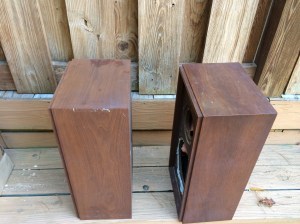
Dirty KLH 20 cabinets
The 20s are a little hard to test, because they do not use + – binding posts in the back, instead using a single 1/4″ wire jack. This is a little annoying. I ended up cutting and stripping the plugs and wires from a couple of RCA cables to interface.
When plugged in to the stereo I had a disappointment – the tweeters were non-functioning on both speakers.
I’ve been through this before with my KLH Model 6s and was not interested in sourcing more original tweeters if these turned out to be dead. Luckily when I tested the drivers individually, the tweeters were all working – the problem was likely a dead capacitor inside. I can handle a recap so I ordered some parts and went to work.
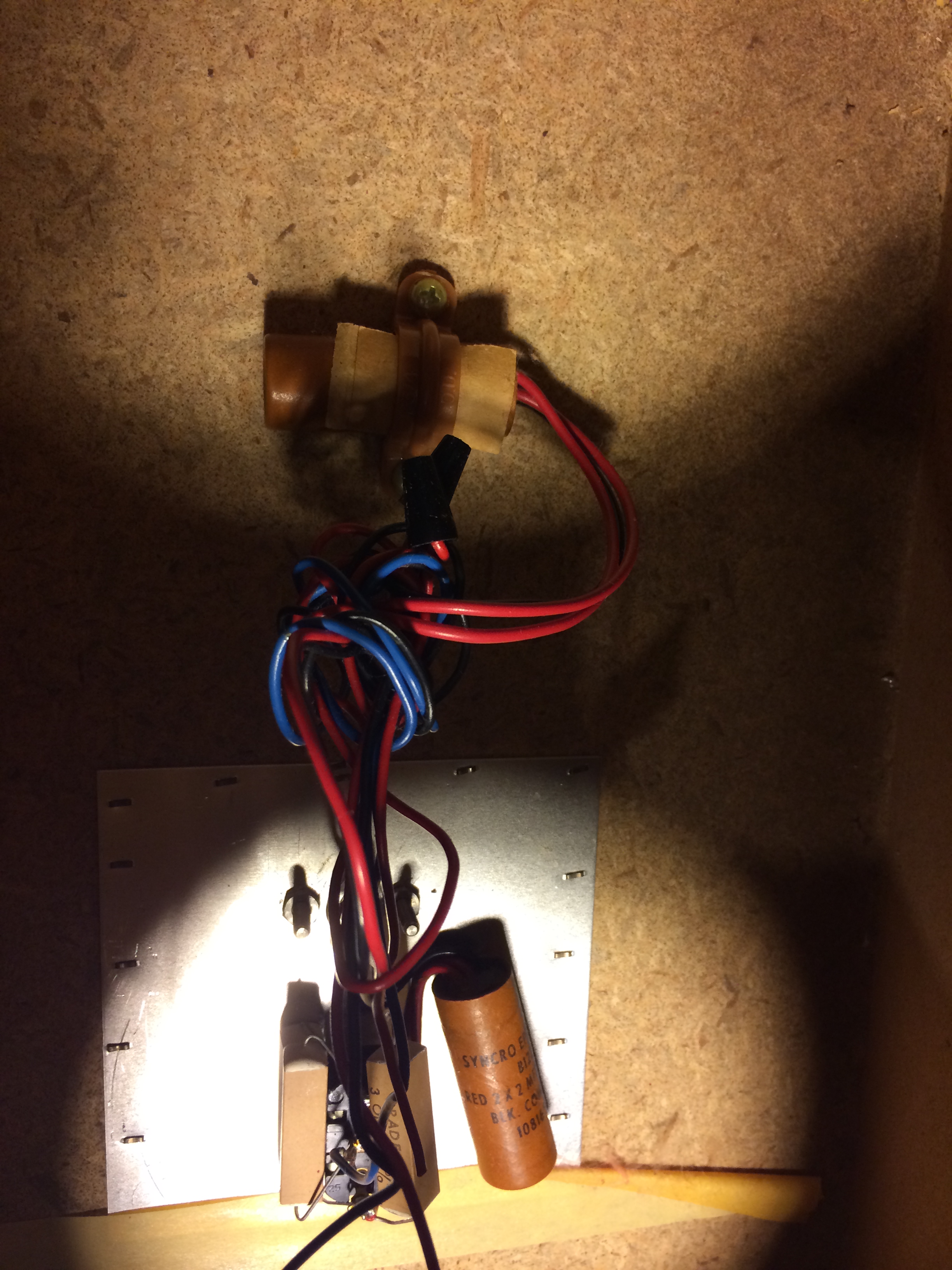
The KLH two-way crossovers are pretty standard and easy to work on. There’s one capacitor to replace in the positive line to the tweeter, and two to replace in the tweeter brilliance switch connected to the rear binding panel. Soldering those and soldering the wire connections (originally they were just twisted together from the factory) is pretty easy – I had plenty of practice from my KLH 6s.

KLH Model 20 crossover. Lots of extra wire. Otherwise pretty simple
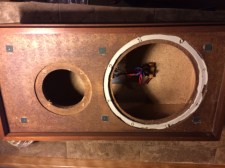
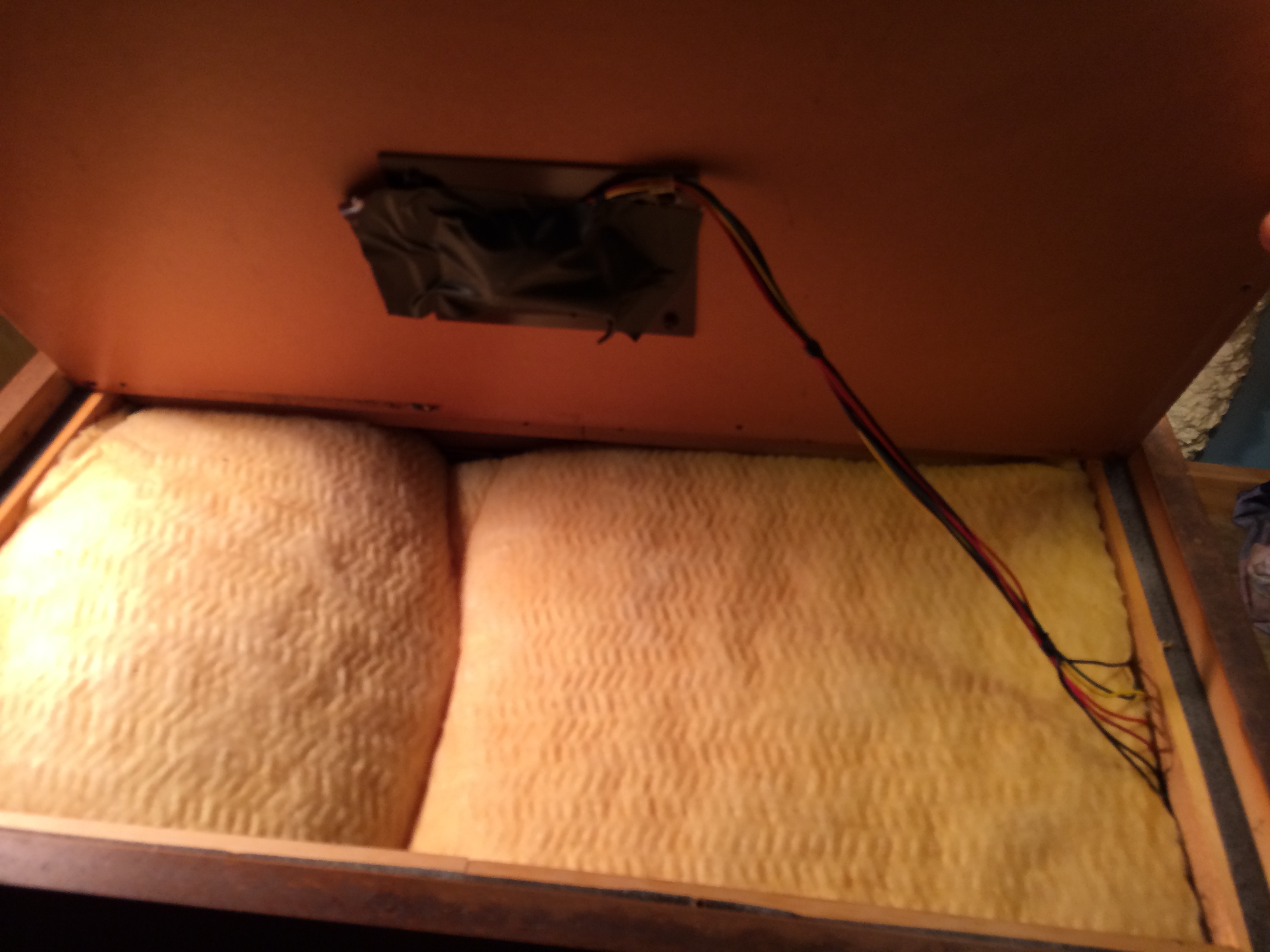
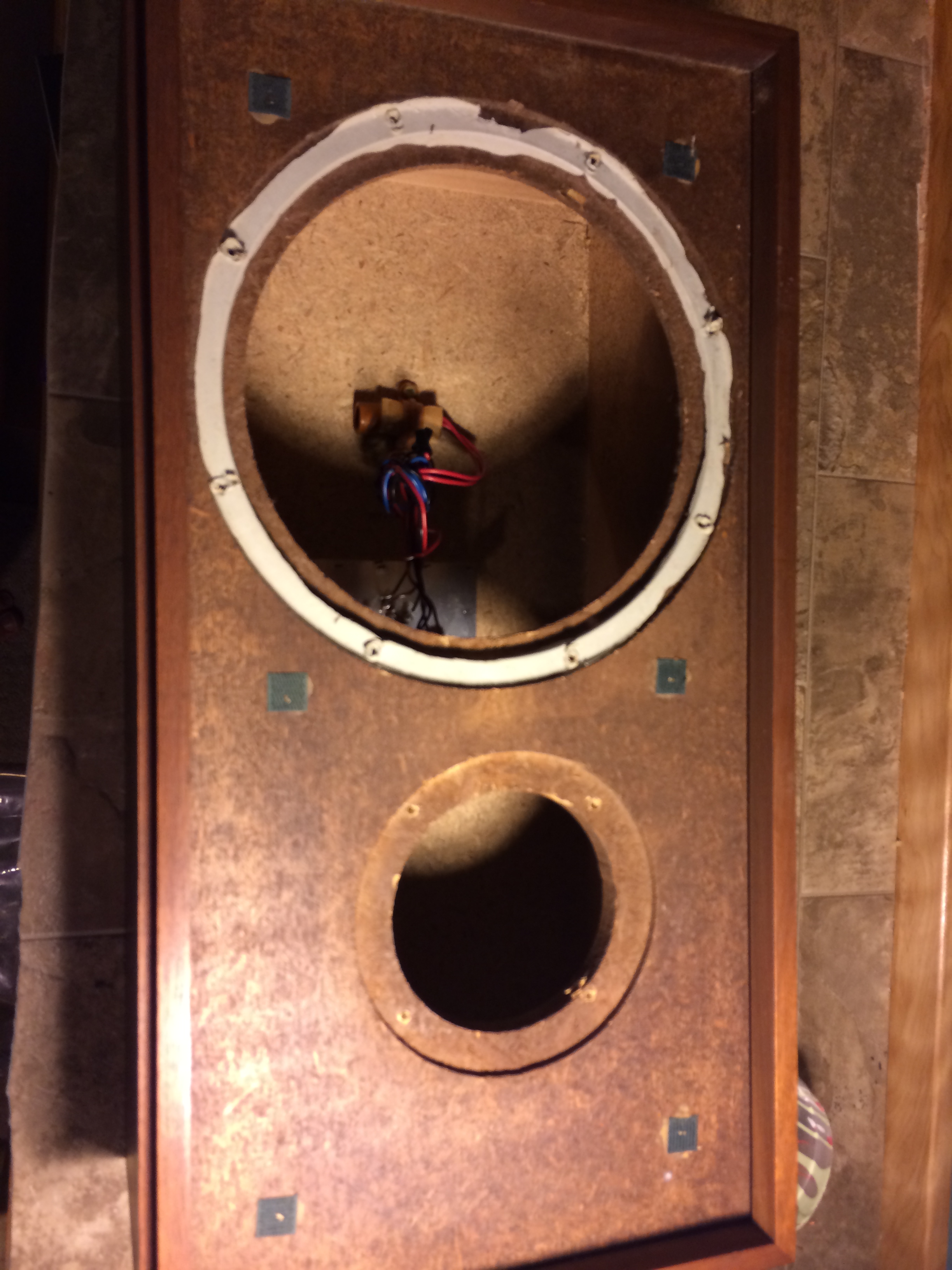
KLH Model 20 cabinet sans drivers.
While I was in there, I also decided to put in real binding posts so I could use these speakers with general-purpose speaker wire and not my hacked RCA head workaround.
I drilled holes through the metal backing plate next to the single RCA plug and ran some surplus binding posts from my old Polk 7As through the holes. I then soldered the internal leads from the old single post to the two new ones.
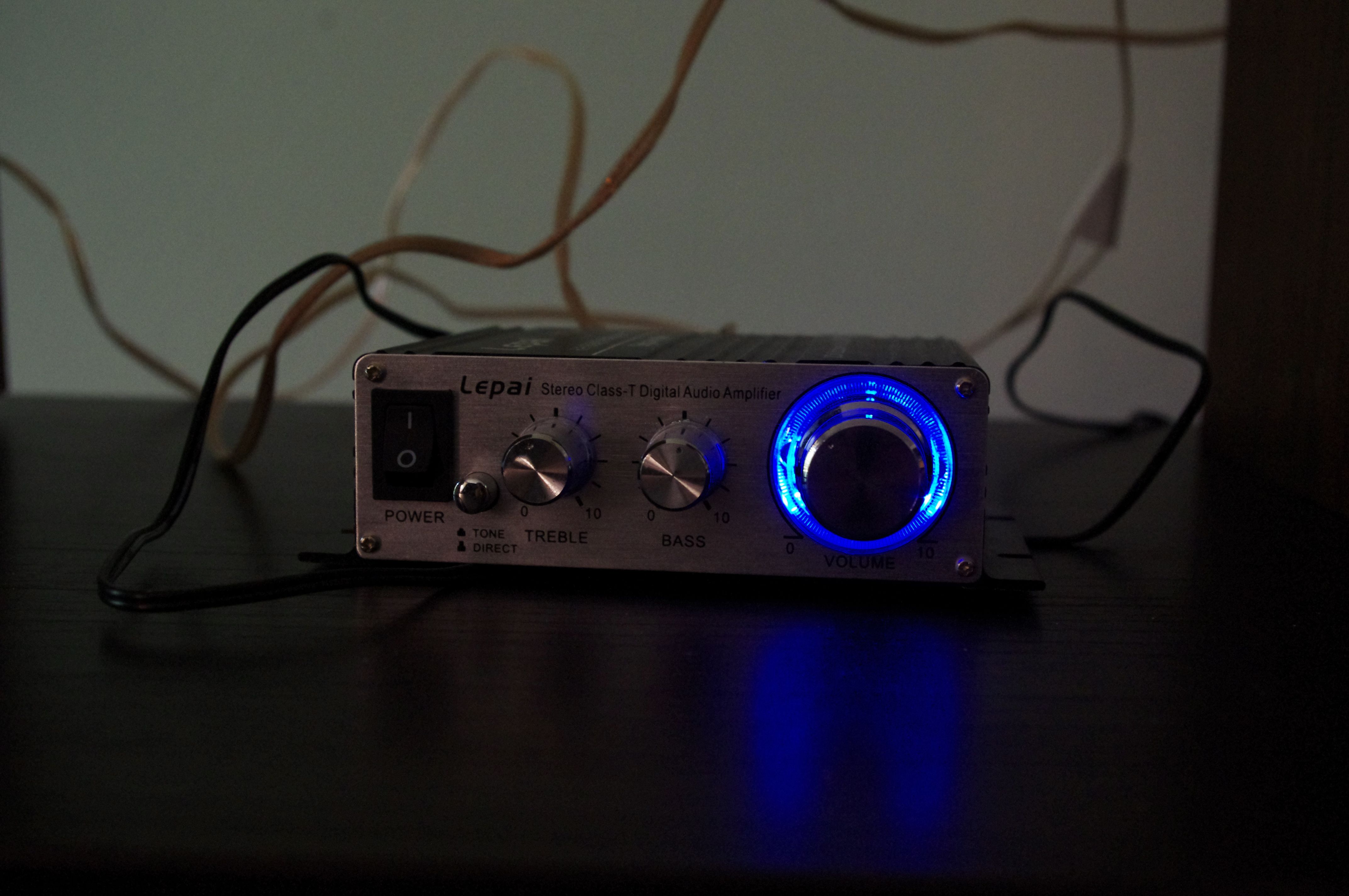
Once everything was in I hooked up my Lepai 2020+ and the drivers to test the crossover.
Before I go any further, does anyone see a problem with my description of my work so far?
Well, I didn’t either. And that was a dumb mistake.
Because the second I turned on my Lepai, it started making a sound I’d never heard before – ‘click-click, click-click, click-click’. Why was a relay going so much?
And no sound was coming out of the speakers. weird. And then when I hooked the leads from the Lepai directly to the woofer, there was no sound either.
Now that was strange – I knew the woofer worked.
Oh. Crap.
I ran the binding posts through a single metal plate. I had created a perfect short circuit and jammed my amp into it. That was smart.
Thank goodness I used my $20 lepai and not my megabuck Pioneer or any of my other crucial systems.
So what did I learn, other than that I am an idiot?
1. Think before you drill
2. Measure twice, cut once
3. Test your work with gear you’re willing to lose.
So then I pulled some fresh (and much nicer) binding posts out of my drawer and drilled some real deep holes through the back of the cabinet away from the metal plate to hook up the crossover. Then I plugged and sealed all my earlier work with hot glue.

New binding posts. Still have to clean up some of the hot glue.
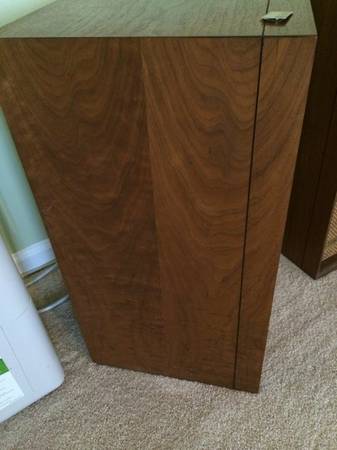
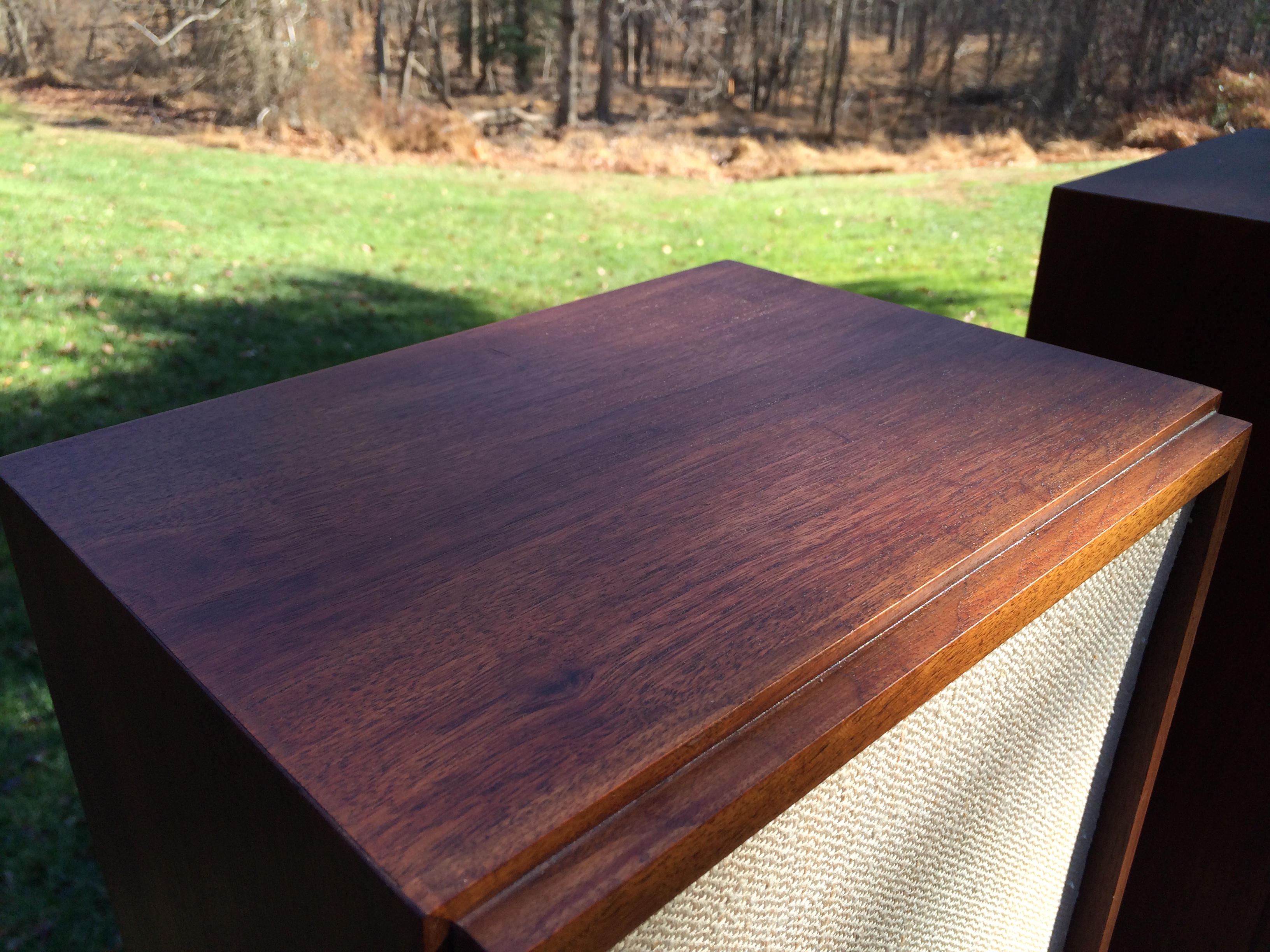
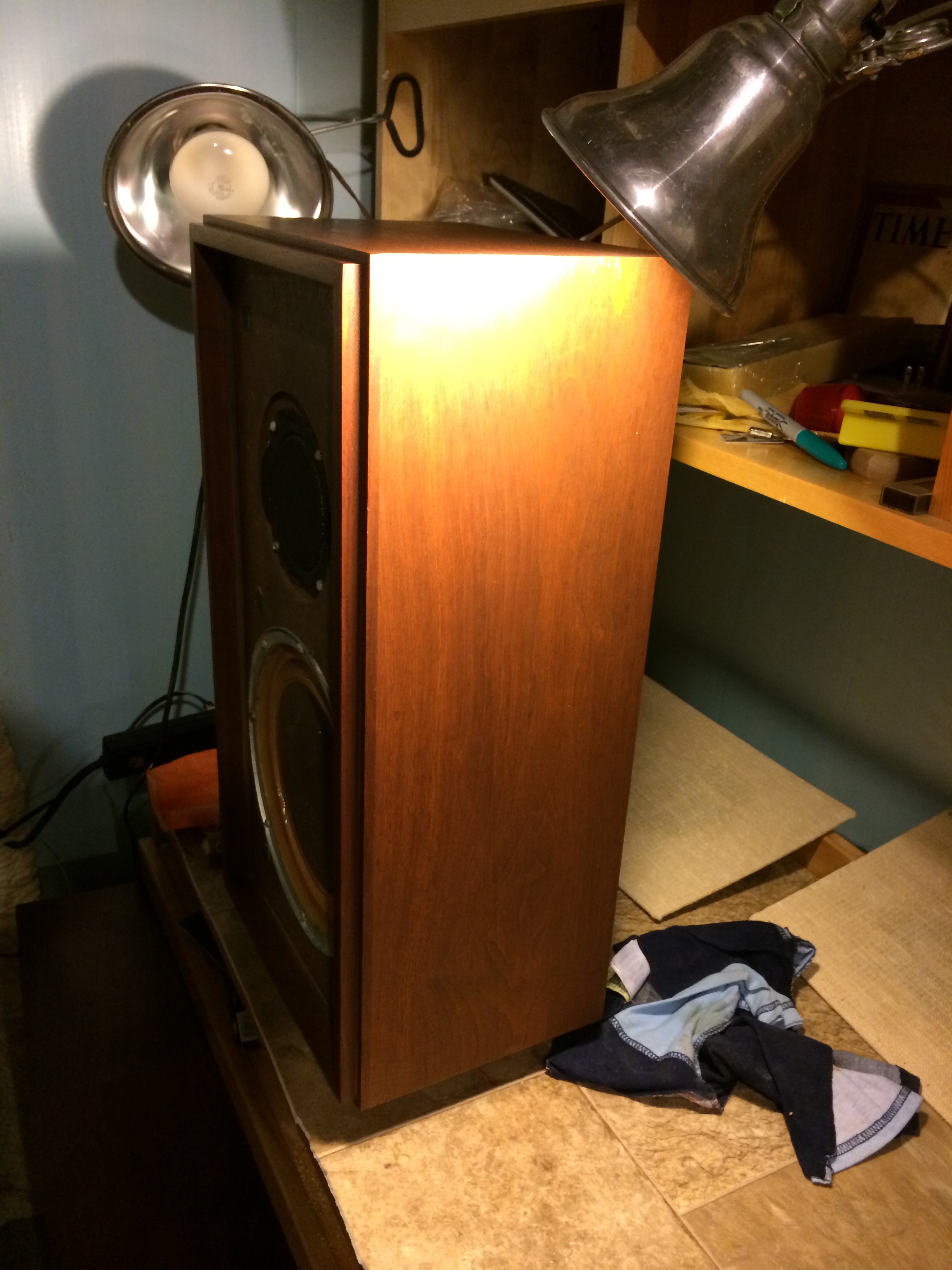
Once the insides were done, I put the insulation back in (pink fiberglass, be sure to wear gloves and a mask) and polished the cabinets. I used steel wool and mineral spirits to clean off grime and even out scratches, then came 0000 steel wool and Howard’s Restore a Finish to give them a deep even finish. It worked wonders – they are an amazing mahogany color now. I’m going to use some Howards Feed N Wax tonight to make them shine.
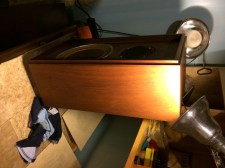
 KLH Model 20 back together
- KLH Model 20. Nice even finish. Thanks Howard’s!
So how do they sound now? Great, actually. Bass is very tight. I also used speaker gasket seals around the drivers to make the cabinets airtight. They sound very good. Bass seems pretty deep, with a satisfying amount of rumble. Highs are good but decidedly vintage in the KLH mode – highs are still rolled off a bit but after 5 minutes of listening you don’t notice or care – you’re in love with how pleasant the music is.
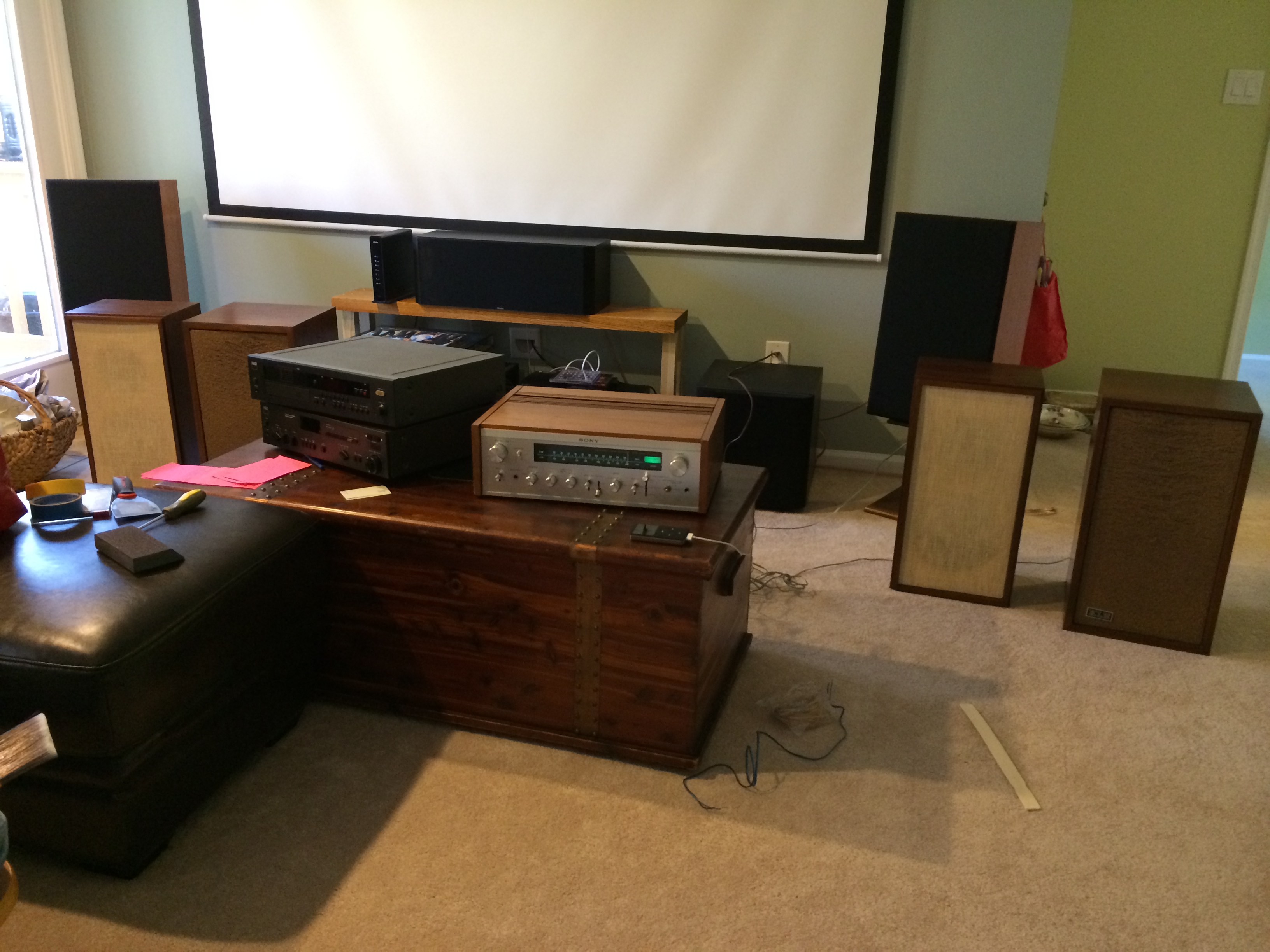
I haven’t had a chance to A/B them with my Model 6s yet. I’ll be interested to see how the larger cabinet of the 6s changes the character of the sound. Other than that (and the fact that the Model 20’s woofers are 4 ohm and not 8) these are identical systems. Well, and the tweeters in the 6s have been replaced, but when I did that I could find no appreciable difference between the sound characteristics of the original and my new ones.
I haven’t re-doped the surrounds yet either. I’m going to do the 20 vs 6 test and evaluate bass performance, then try doping the 6s before working on the 20s. the 20s actually have very clean yellow cloth surrounds on the woofers, which leads me to believe that perhaps the don’t need a re-doping as bad as my 6s.
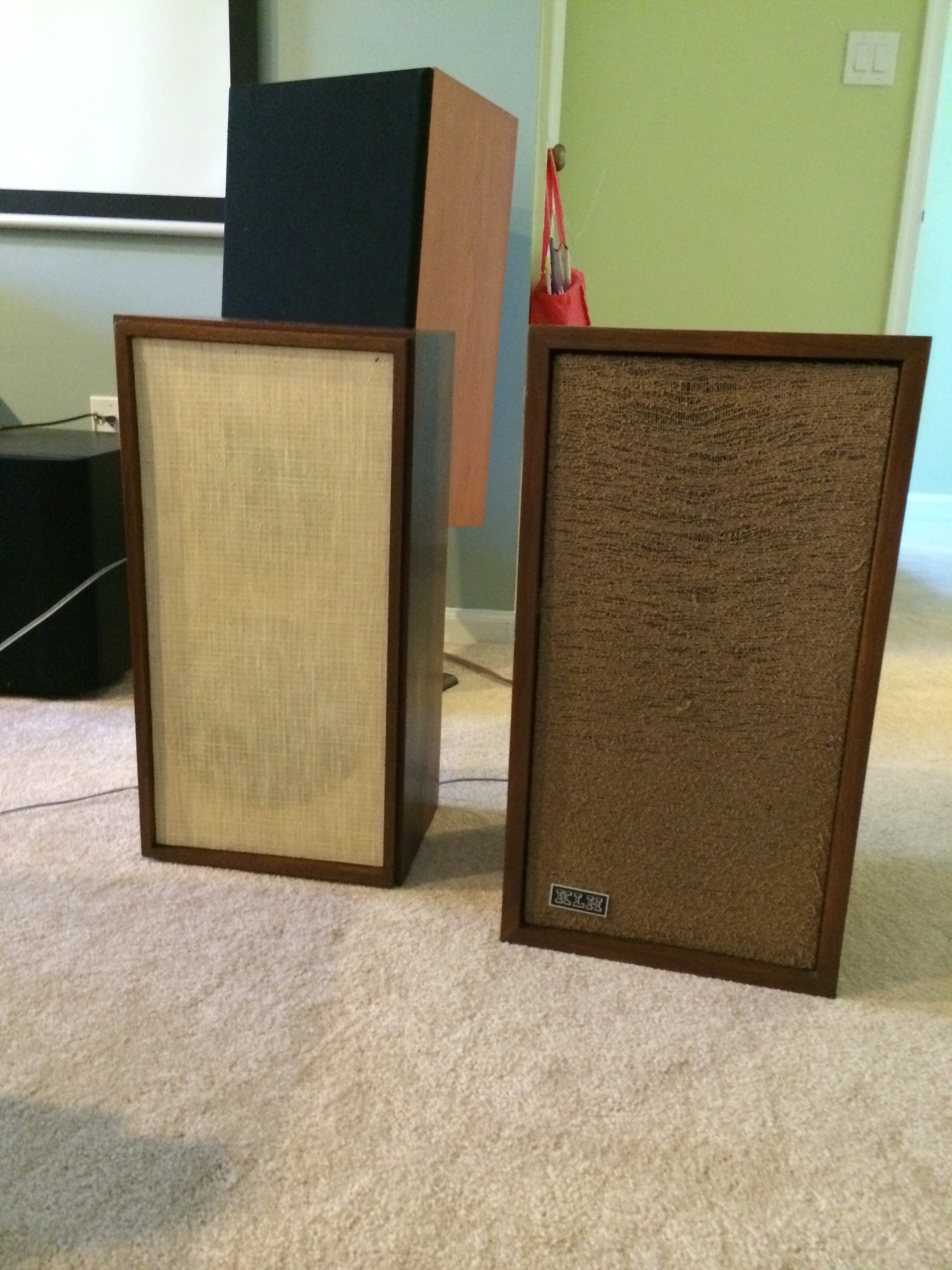
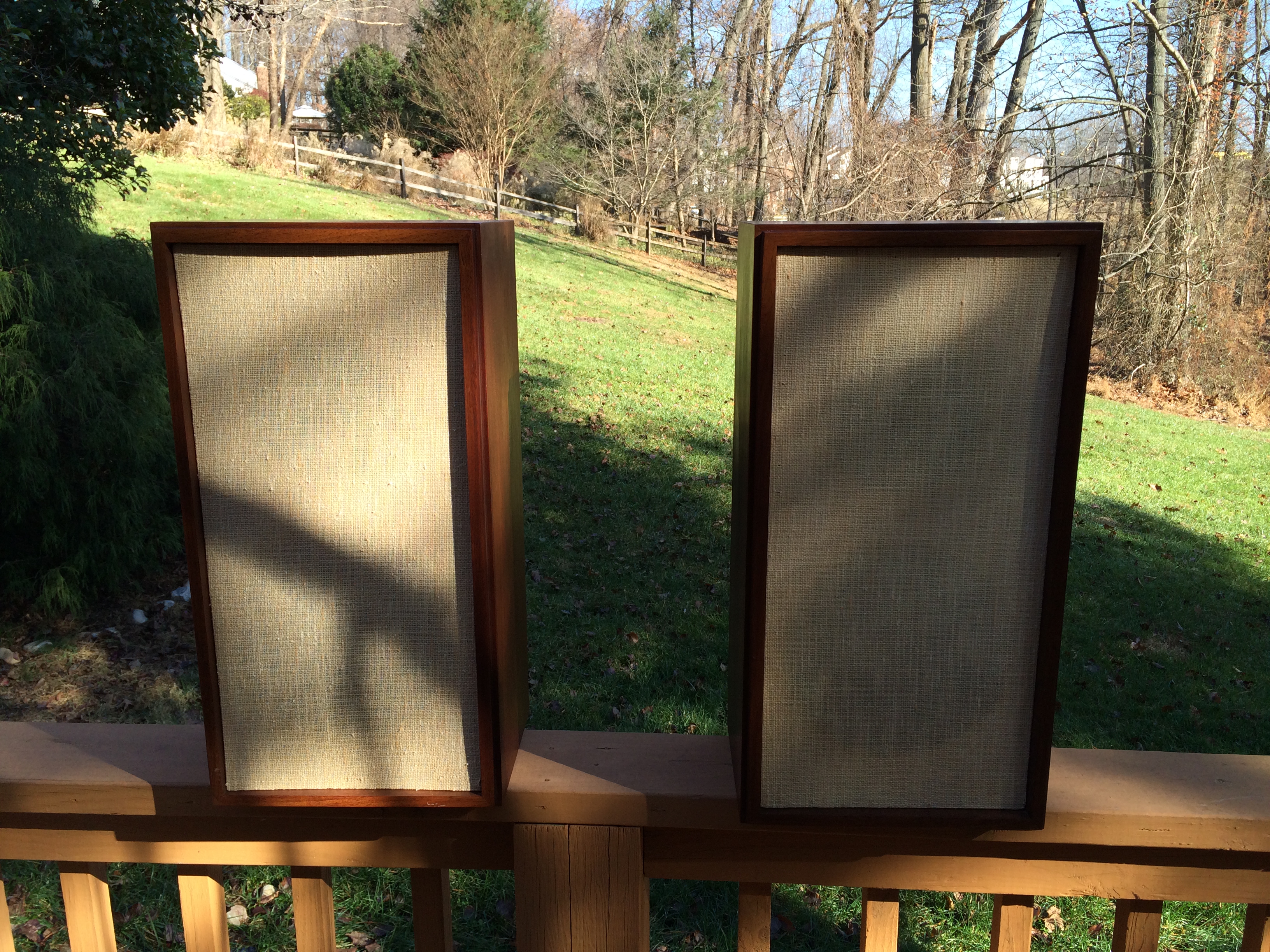
That comparison will be forthcoming. And soon I will likely be declaring a victor. And then I will have a dilemma. I only have room for one pair of vintage KLHs, and I have two excellent examples. I actually like the looks of the 20s a little better, due to their rounded front edges on the cabinets and the original beige linen grilles. The grilles on my 6s are brown saggy weave. Perhaps the difference is because the manufacture date of the 6s was 1972 and these 20s were made in 1965 – tastes evolve.
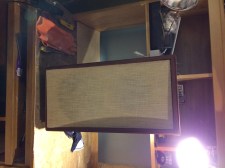
KLH Model 20 with grilles

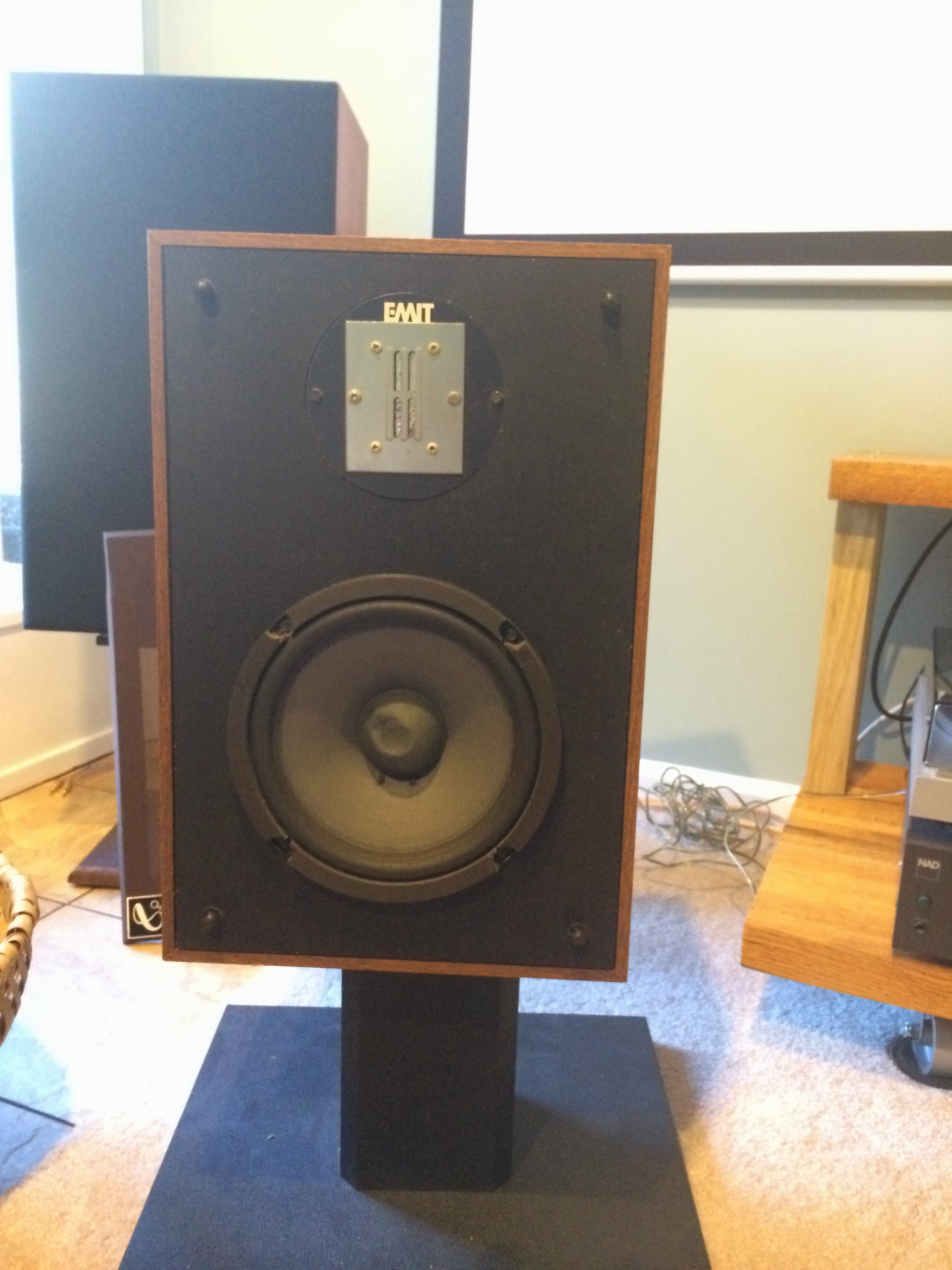
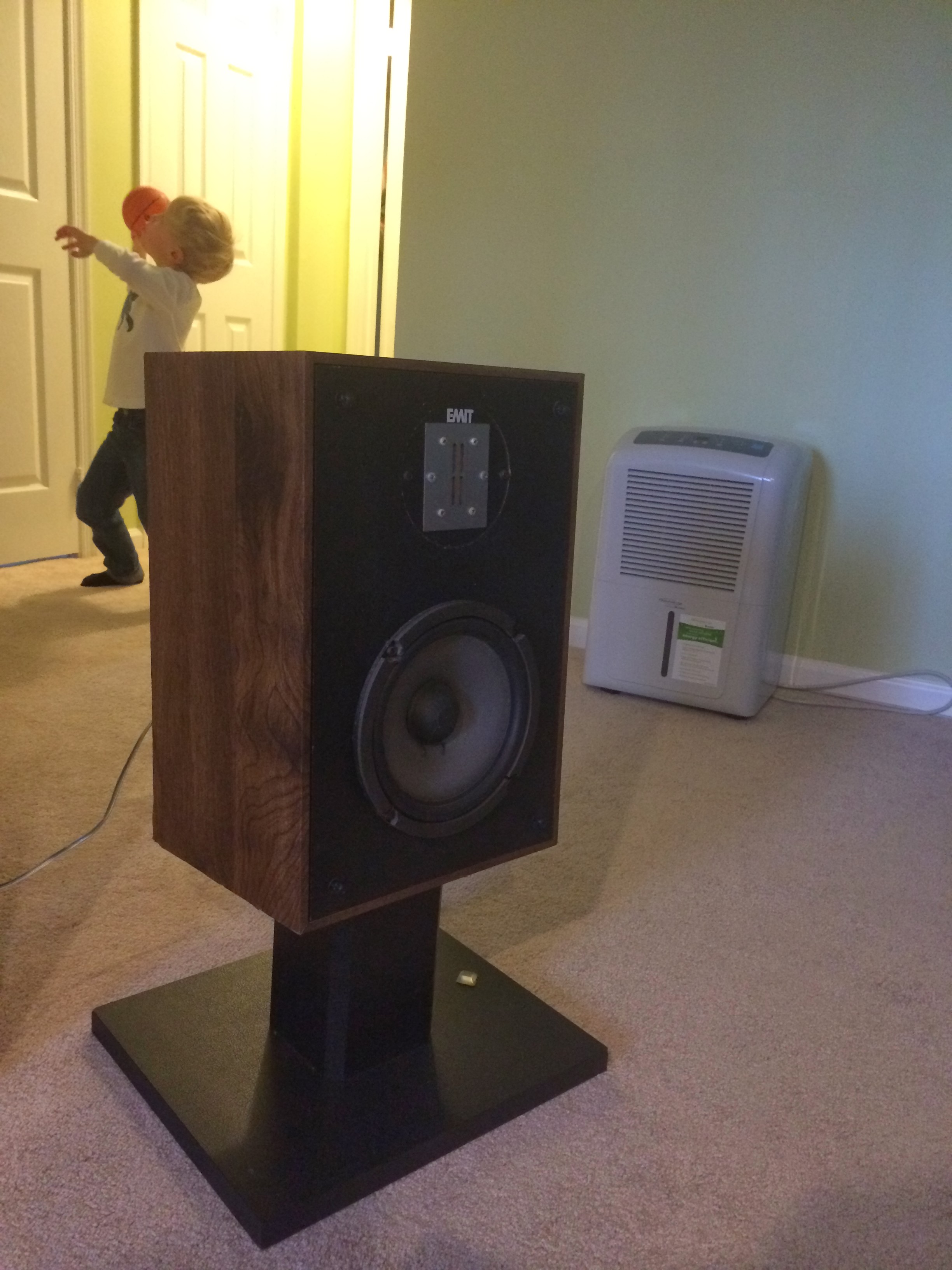
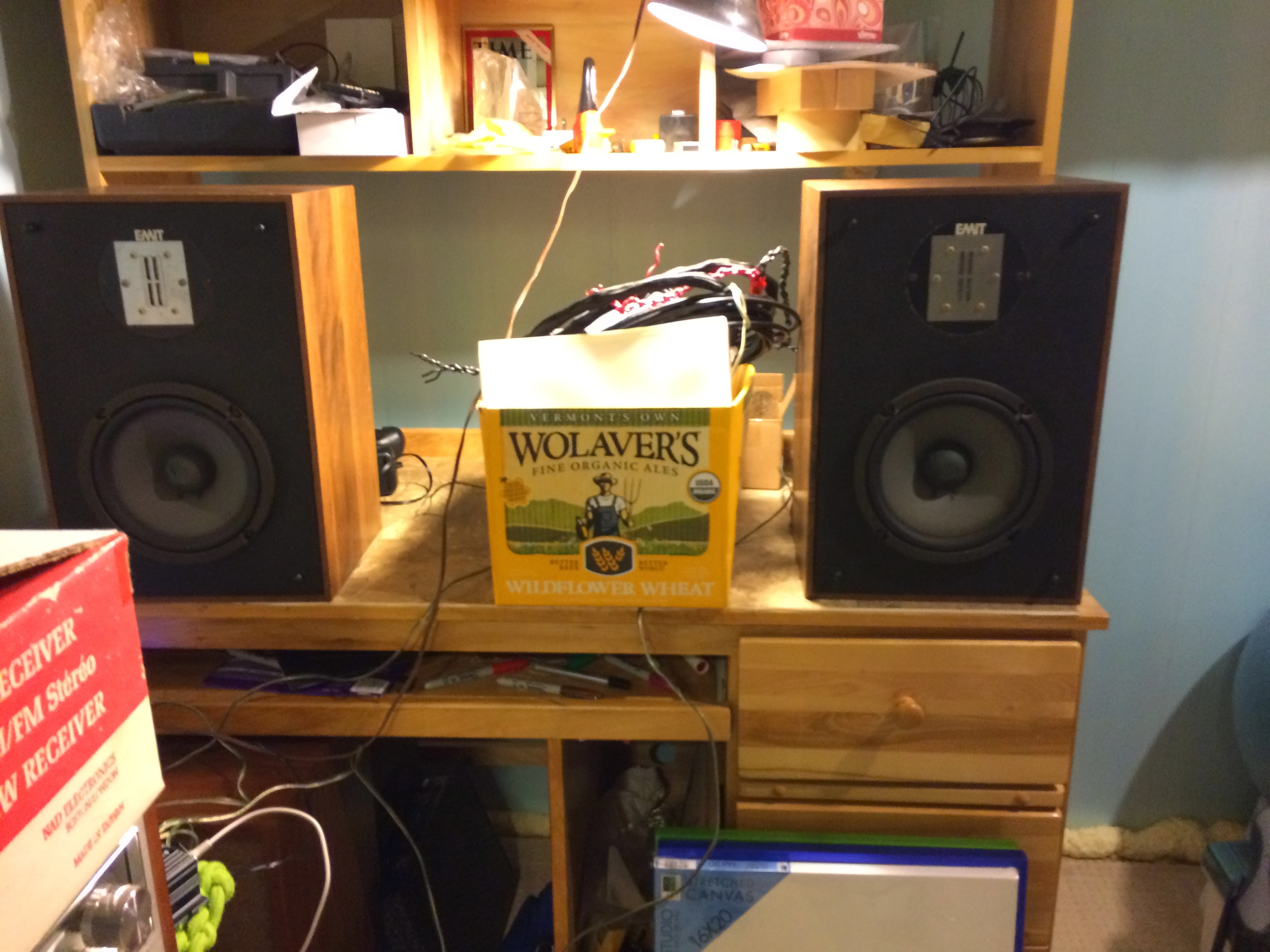
My KLH Model 6s. Who now have competition
But I digress. I’ll enjoy these 20s but then they’ll likely have to find a new home. Hopefully with someone who can appreciate them as much as I (and my poor Lepai amp) have.
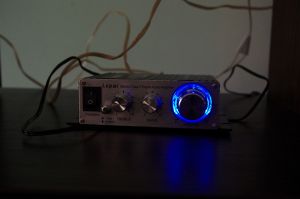
RIP, little Lepai!
Posted in Uncategorized
Tags: DIY, klh, Model 20, Restoration, speaker








 silverfacestereo